


Today, oil fell noticeably. Brent dropped more than 3% and is trading below $110 per barrel, fully erasing Friday's gains, while WTI fell below $101.
The trigger was an Axios piece reporting that Donald Trump told Benjamin Netanyahu in a phone call that he wants to give diplomacy with Iran more time before deciding whether to resume strikes after Tuesday's midterm elections. According to the outlet, such a strategy worried the Israeli prime minister. I should note that the war began at the end of February with joint strikes by the two countries on Iran.
Later, the signal was confirmed by Secretary of State Marco Rubio. On Saturday, he said no decision on new strikes has been made and that Trump prefers a diplomatic settlement. That chain of events removed some risk from the price. Previously, the market priced in a scenario where the US would begin a campaign immediately after the elections; now it has received at least a temporary pause. Consumers and Republicans ahead of the vote benefit because cheap oil eases pressure on fuel prices, while exporters and long-position holders lose out.
But it's too early to celebrate. Iran's supreme leader Mojtaba Khamenei ordered commanders to prepare for a new confrontation with the US and Israel, even though the foreign minister speaks of progress in talks and an Iranian delegation on Saturday discussed the issue with mediators in Qatar. Gulf countries also fear that a new attack could unleash an even more destructive war whose consequences they would have to deal with themselves.
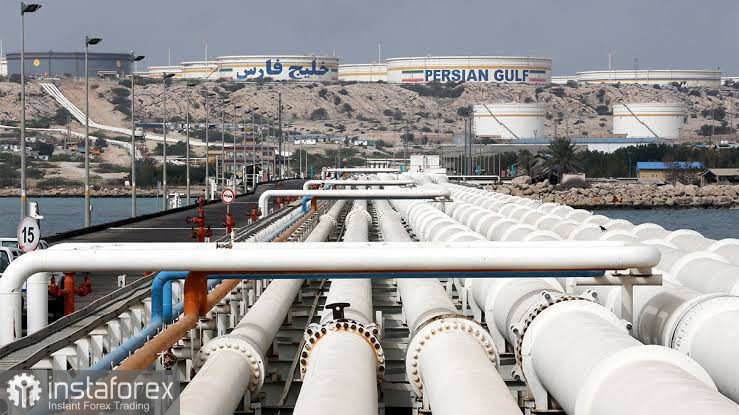
However, the physical market remains tight. Crude exports from the Persian Gulf are close to prewar levels, but refined product supplies are limited. The Middle East conflict, together with intensified Ukrainian strikes on Russian refineries, pushed fuel prices up, and diesel has surged sharply in the US and Europe. Against this backdrop, Goldman Sachs raised its Brent forecast to $105 for December and to $88 on average for next year, citing a high risk of disruptions.
Separately, OPEC+ over the weekend decided to leave quotas unchanged for December after the voluntary cuts ended in September. The decision is mainly symbolic, since hostilities in the Middle East, including in the Red Sea, continue to threaten exports and infrastructure.
I believe a drop below $110 will be short-lived. Before the elections, oil may remain under pressure from diplomatic signals, but the physical shortage of refined products and the risk of renewed strikes do not allow us to speak of a reversal. If after the vote Trump returns to a military scenario or attacks on ships around Hormuz continue, Brent, in my view, will quickly return above $115. A deeper fall is possible only with concrete steps toward a ceasefire, and so far there have been no such statements.
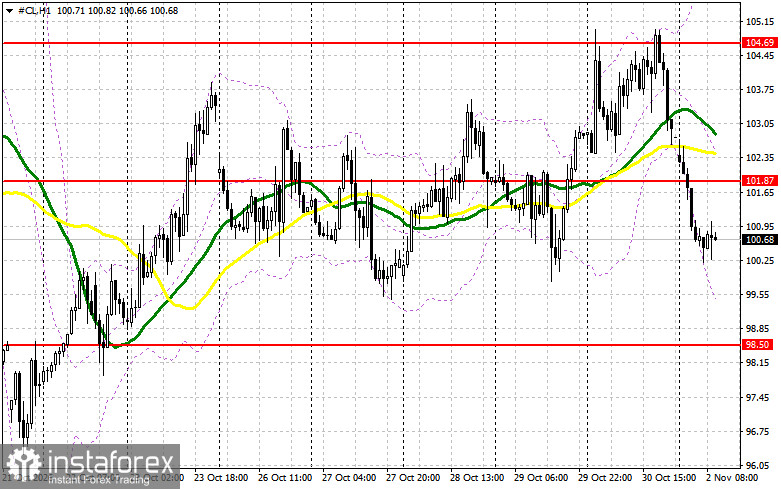
As for the current technical picture for oil, buyers need to take the nearest resistance at $101. That would target $105, above which a breakout will be difficult. The most distant target is the $109 area. In the event of a decline, bears will try to seize control of $98. If they succeed, a range breakout would deal a serious blow to bull positions and push oil to a $95 low with a prospect of moving to $92.


