The US Dollar Index (DXY), which measures the greenback against a basket of major global currencies, failed to hold Friday's modest recovery from the 101.50 area and ran into seller pressure again at the start of the new trading week. In the first half of the European session, the index maintained a negative intraday tone and traded near 101.40, down more than 0.20% for the day. Renewed expectations of a diplomatic settlement that could end the standoff between the US and Iran drove the weakeness.
According to reports, an Iranian delegation held talks with Qatari mediators for a third consecutive day on Sunday and presented a two?day scheme to unblock the Strait of Hormuz, conditional on the US meeting certain demands. US President Donald Trump said the dialogue with Tehran is developing positively and that Iran appears ready to reach an agreement. Such news boosted risk appetite and reduced demand for the US dollar (USD) as a classic safe?haven asset.
Geopolitical uncertainty has not disappeared, however: Donald Trump left open the possibility of new military action after the midterm elections scheduled for November 3. Additional support for DXY could come from an escalation of the Russia?Ukraine conflict and from market expectations that the Federal Reserve will raise rates again in December. Sellers should therefore remain cautious, especially ahead of this week's key US macro releases.
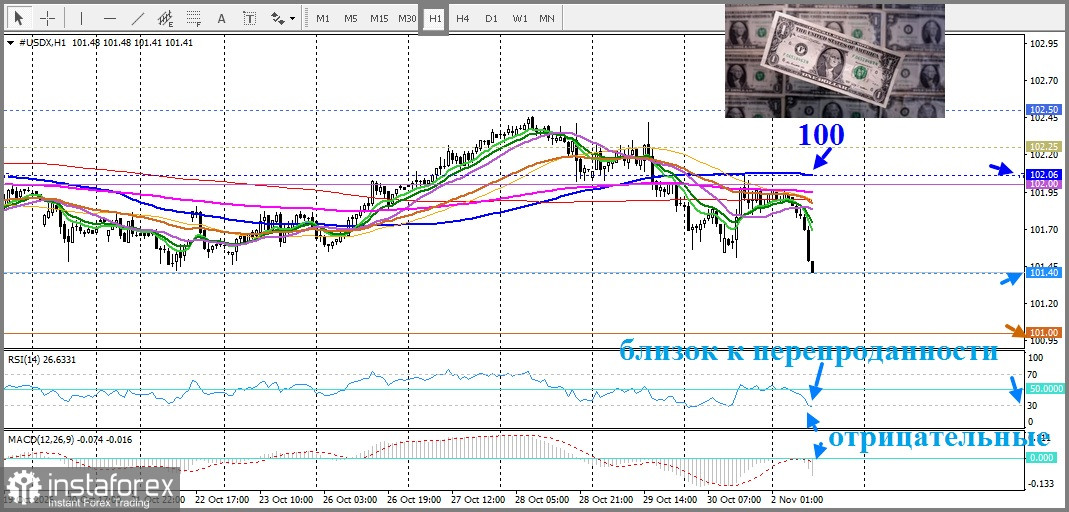
Technically, the intraday bias for the index remains bearish while prices sit below the 100?hour simple moving average (SMA) around 102.06. Oscillators are negative, and the RSI has approached oversold territory, warning of a possible correction or consolidation. Taken together, these momentum signals point to the bears having the edge.
To relieve the current downward pressure, the index needs to reclaim the nearest resistance — the 100?period SMA. Immediate support is at 101.40. A decisive break below that level could accelerate the decline: DXY may drop beneath the psychologically important 101.00 mark.