Today, Wednesday, the GBP/USD pair attracted strong buying interest, with the exchange rate reaching 1.3475, its highest level since September 16. This surge was largely driven by broad-based weakness in the US dollar.
The US Dollar Index (DXY), which tracks the US dollar against a basket of other currencies, fell to a monthly low.
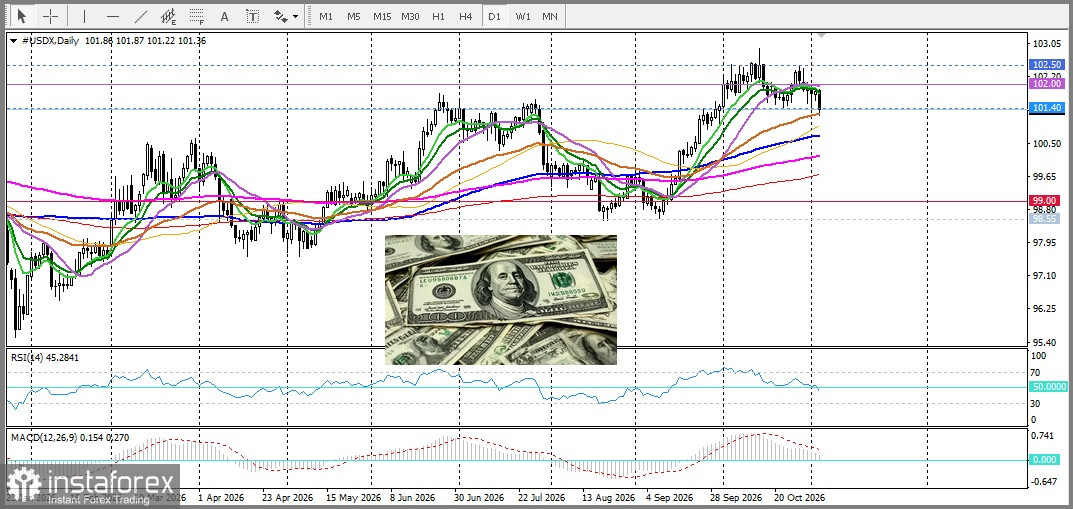
The decline in the index was triggered by preliminary results from the US midterm elections, which suggested an increased likelihood of a Democratic Party victory. The potential political paralysis in Washington resulting from such an outcome traditionally encourages capital flows into safe-haven assets, such as US Treasury bonds, consequently pushing their yields lower.
In addition, emerging prospects for a diplomatic resolution to tensions with Iran have further diminished the US dollar's safe-haven appeal, providing additional support for the GBP/USD pair.
On Tuesday, US President Donald Trump stated in an interview with the Financial Times that there were no plans to strike Iran in the near future. The statement sparked optimism about the possibility of a diplomatic resolution to the US-Iran conflict, prompting market participants to price out the geopolitical risk premium.
Meanwhile, the British pound continues to demonstrate resilience, outperforming many other currencies. This performance has been supported by easing concerns about the UK's fiscal outlook following the latest macroeconomic releases, as well as growing investor confidence that the Bank of England will raise its key interest rate at its upcoming meeting on Thursday.
Meanwhile, the latest data from the US Department of Labor, published in the monthly Job Openings and Labor Turnover Survey (JOLTS), showed that hiring remained steady. The number of job openings increased to 7.5 million in September, exceeding forecasts. Against the backdrop of persistent inflation risks fueled by high energy prices, these figures reinforce expectations of further monetary policy tightening by the US Federal Reserve. However, despite these factors, the US dollar has failed to gain support, suggesting that further gains remain the most likely scenario for GBP/USD.
In the near term, traders should watch for the ADP private-sector employment report and the ISM Services Purchasing Managers' Index (ISM Services PMI), both of which could influence the pair's direction during the North American session. However, the main events of the week will be the Bank of England's monetary policy decision on Thursday and the key US labor market indicator, the Nonfarm Payrolls (NFP) report, due on Friday. Given the overall balance of supportive fundamental factors, any short-term corrective pullbacks in GBP/USD are likely to be viewed by market participants as opportunities to open long positions.
From a technical perspective, GBP/USD has a bullish short-term bias. The pair has decisively broken above the 200-day simple moving average (SMA), currently around 1.3424, and moved above 1.3450, with the next target at the psychologically significant 1.3500 level. This price action indicates that buyers are actively defending this key area following the recovery of the price range within the recent downtrend. The next resistance level is at 1.3570. On the other hand, the nearest support is provided by the 200-day SMA. A more substantial demand zone could develop around the 100-day and 50-day SMAs. Meanwhile, the oscillators are in positive territory, indicating that buyers have the upper hand.
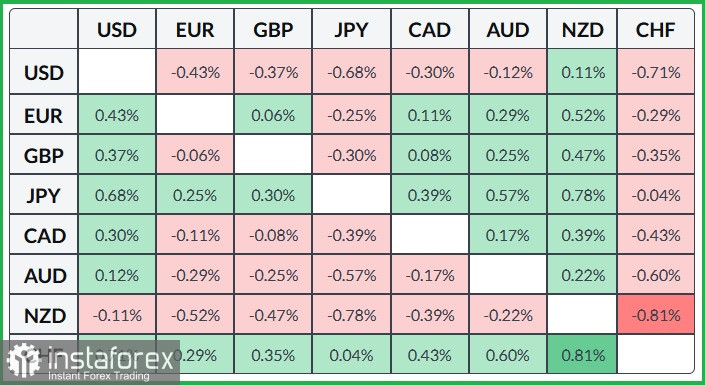
The table below shows the current percentage changes in the US dollar against major global currencies. The most pronounced weakness in the US dollar is observed against the New Zealand dollar.