


A rare pattern emerged in global markets midweek: tech stocks were broadly rising while the US dollar showed no sign of retreat. On Wall Street, the saving grace for the AI industry was a quarterly report from cloud compute provider CoreWeave — the company posted numbers that breathed life into a market battered by recent sell-offs:
- Q3 revenue jumped 168% to $3.7 billion;
- Full-year revenue guidance raised to $13.0–$13.3 billion (consensus $12.86 billion);
- Adjusted operating-profit guidance also comfortably beat Wall Street expectations;
- Client prepayments and deposits stood at about $9 billion, confirming that physical demand for compute remains intense
In the US, CoreWeave shares surged double digits, and that wave quickly spread across Asia and Europe. Nasdaq-100 futures popped nearly 2%, leaving more conservative S&P 500 and Dow Jones indices behind. There is reason for buyers to cheer, but it's too soon to pop the champagne. The rally looks local and confined to the tech sector — there is no broad-based, market-wide buying. CoreWeave's report removed an immediate fear but did not solve fundamental problems:
- Big-tech valuations remain stretched
- Massive needs for debt financing have not disappeared
- Data-center development faces regulatory and energy constraints
Just last Thursday, the Nasdaq Composite tumbled 5.5%, wiping out prior gains. While tech stocks celebrate CoreWeave, the dollar is being fed by a different fuel: the bond market is sharply repricing Fed policy expectations. October's US CPI came in hotter than expected, and a series of hawkish Fed remarks have finally pushed doves off the field. CME FedWatch derivatives now show:
- ~85.6% chance of a 25-bp rate hike in December
- ~14.4% chance of an aggressive 50-bp move
- ~0% chance of a pause
Why are stocks and the dollar rising together?
Normally, a strong dollar and rising yields crush the tech sector. Why are both rising in tandem now? Three time-frame drivers are operating simultaneously:
- Different nature of the impulses. AI stocks are reacting to microeconomic news — explosive CoreWeave revenue growth and confirmed infrastructure budgets. The dollar is responding to macro forces — markets pricing in sustained Fed hawkishness. In the short term, these flows don't intersect.
- AI as a GDP backstop. Big tech's massive server spending supports US real growth. Paradoxically, strong activity gives the Fed a carte blanche: the regulator can keep rates higher for longer without triggering an immediate recession. Robust AI demand thus pleases shareholders and fuels Fed hawks, strengthening the dollar.
- Rotation from safe havens into risk. Seeing optimism in tech, institutional investors have been moving out of Treasuries back into equities. Selling of government bonds pushes prices down and yields up — which in turn fans the dollar rally. This alliance looks powerful but is not sustainable indefinitely.
If Treasury yields settle above 5% and rate expectations keep rising, borrowing costs will squeeze big tech's financial arteries. Tech multiples will come under pressure and borrowing billions to buy chips will become prohibitively expensive. The same rise in yields that is boosting the dollar now eventually risks undoing the tech bounce. Meanwhile, tectonic shifts are happening at the top of the corporate world.
Microsoft overtook Nvidia for the first time since June 2025 to reclaim the No. 2 spot in global market capitalization. Until recently, Nvidia held the absolute crown, but a high-profile scandal around CEO Jensen Huang shook investor confidence. Apple now sits alone on the throne while the planet's leading AI-chip maker slipped to third. The corporate drama also exposed a much larger problem — Singapore's role. The island state has become central to investigations into circumvention of US export controls.
It appears Chinese tech giants obtained steady access to top Nvidia gear for years through a complex web of intermediaries: chips were formally purchased by regional cloud providers for local use but effectively leased into China. Washington found it almost impossible to police that chain. The episode showed that any White House ban on direct sales is partial at best: dozens of legal entities, shell companies and resellers in third jurisdictions stand between a chip factory and a server in Shenzhen. Global semiconductor logistics cannot be fully controlled by directives from US trade desks.
The most dangerous shift is philosophical and geopolitical. The US and China have abandoned the idea of a stable, predictable global order. Rules have been replaced by a strategy of uncertainty: uncertainty is no longer a side risk but the main lever for extracting concessions. This is most visible in the style of Donald Trump; Beijing answers in kind, toggling between open code, hidden backdoors and export curbs on rare materials.
The real-economy consequences are destructive. When rules change every few weeks, corporations cannot set long-term budgets, build factories or plan capex for years ahead. The global economy has slipped into a chronic instability mode where the only constant is readiness for the next sudden shock.
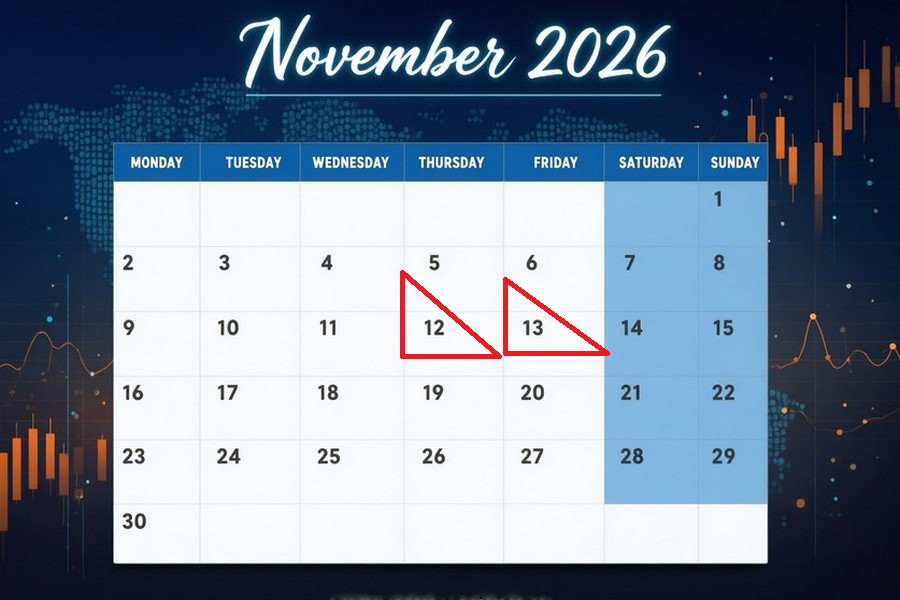
November 12
November 12, 02:50 / Japan / Producer Price Index (PPI) for October / prev.: 7.6% / actual: 6.8% / forecast: 6.5% / USD/JPY – up
In September, the annual growth of Japan's producer prices slowed to 6.8%, the weakest reading since May, as cost pressure eased. Notable cooling occurred in:
- petroleum products
- coal
- transport and industrial equipment
This pushed monthly prices down 0.3%. Elevated inflationary pressure remains in chemicals and the IT sector. Further deceleration in wholesale inflation would weaken arguments for BoJ tightening and push the dollar higher against the yen.
November 12, 03:00 / Australia / Melbourne Institute consumer inflation expectations (leading) for November / prev.: 4.9% / actual: 5.3% / forecast: 5.4% / AUD/USD – up
In October, Australian consumers' inflation expectations jumped to 5.3%, the highest since June, driven by persistent core price growth. AI infrastructure investment and ongoing cost pressures have contributed to higher expectations, prompting the central bank to lift its cash rate to 4.60%. The board remains ready to tighten further to bring inflation back toward target. Rising consumer inflation expectations will reinforce hawkish rate bets and support the Australian dollar.
November 12, 03:01 / UK / RICS House Price Balance for October / prev.: -28% / actual: -32% / forecast: -34% / GBP/USD – down
The September RICS survey recorded a deeper downturn in the UK housing market: the price balance fell to -32%, ending a four-month recovery. Higher mortgage rates cooled buyer demand, bringing the new-buyer enquiries balance down to -22% and weakening sales expectations. The sharpest price falls were in London; northern regions showed more resilience. A widening negative balance would raise concerns about the property sector and weigh on the pound.
November 12, 10:00 / UK / GDP (Q3) / prev.: 0.8% / actual: 1.4% / forecast: 1.9% / GBP/USD – up
In Q2, the UK economy recorded its strongest expansion since early 2025, accelerating to 1.4% supported by a 1.7% rise in services. Corporate investment jumped 5.2%, household consumption remained firm, and net exports contributed positively. Manufacturing slowed only modestly, with construction down 1.0%. Expected acceleration in growth would strengthen sterling's fundamentals and support an upmove.
November 12, 10:00 / UK / Trade balance in goods for September / prev.: -£19.3bn / actual: -£18.01bn / forecast: -£19.2bn / GBP/USD – down
In August, the UK goods trade deficit narrowed to £18.01bn, the smallest gap since January. The improvement reflected a 2.4% drop in goods imports to a seven-month low as purchases of foreign equipment fell. Exports to the EU slipped 7.3%, limiting further rebalancing. A forecasted widening of the goods deficit would signal weaker external positions and pressure the pound.
November 12, 10:00 / UK / Industrial production for September / prev.: 0.8% / actual: 1.6% / forecast: 2.9% / GBP/USD – up
In August, UK industrial output rose 1.6%, marking a clear acceleration from July. Current production rates are approaching the long-run historical norm of ~1.73%, indicating gradual adaptation of factories to higher costs. Expected pickup in industrial activity would bolster sterling and push GBP/USD toward local highs.
November 12, 10:00 / UK / Construction output for September / prev.: -1.9% / actual: -1.8% / forecast: -2.1% / GBP/USD – down
In August, UK construction output fell 1.8%, extending a ten-month losing streak. The main drag was a 5.8% fall in new construction orders, partly offset by stronger repair and maintenance activity. Over three months, the sector contracted 1.0%, underscoring persistent weakness amid high financing costs. A deeper downturn would weigh on investor sentiment and the pound.
November 12, 10:00 / UK / GDP for September / prev.: 1.8% / actual: 2.1% / forecast 1.9% / GBP/USD – down
In August, the UK economy grew 2.1%, the largest monthly increase since October 2022, following a 1.8% rise the month earlier. The result exceeded the long-term historical benchmark of 1.9%, reflecting broad sector resilience. Expected slowing of growth would limit sterling's upside and trigger some profit-taking.
November 12, 16:30 / Canada / Building permits for September (m/m) / prev.: -15.8% / actual: 8.8% / forecast: -4.0% / USD/CAD – up
In August, Canadian building permits recovered by 8.8% m/m to CAD 13.6bn, driven by a surge in multifamily approvals to CAD 5.8bn. The non-residential segment weakened due to a slump in commercial real estate. The development sector remains volatile and sensitive to credit conditions. A return to negative readings would signal instability and weigh on the loonie.
November 12, 16:30 / US / Initial jobless claims (weekly) / prev.: 195k / actual: 189k / forecast: 195k / USDX (6-currency USD index) – down
Weekly initial claims fell to 189k, matching a 57-year low. Firms are refraining from mass layoffs amid resilient domestic demand, though continuing claims rose to 1.718m. Employer caution is supported by high energy costs and geopolitical uncertainty. A rise in claims would point to gradual labor market cooling and weaken the dollar.
November 12, 18:00 / US / Existing home sales for October (m/m) / prev.: 3.93m / actual: 3.99m / forecast: 3.88m / USDX – down
In September, US existing home sales increased 1.5% m/m to an annualized 3.99m units. Small gains in the South and West offset weakness in the Northeast, taking total listings to 1.6m. The housing market remains sluggish as mortgage costs curb buyer activity. A forecasted drop in sales would confirm property market weakness and pressure the dollar.
November 12, 20:00 / US / EIA weekly crude oil inventories / prev.: -1.892m barrels / actual: -0.865m / forecast: -1.10m / Brent – up
US commercial crude stocks fell by 0.865m barrels, the fifth consecutive weekly decline, while refinery runs rose by 199k b/d. Distillate stocks plunged by 3.565m barrels and gasoline inventories fell by 0.222m, offsetting a modest inflow to Cushing (+280k) and higher net imports. Continued drawdowns would tighten physical supply and support Brent prices.
November 13
November 13, 13:00 / Eurozone / Trade balance for September / prev.: €10.7bn / actual: -€16.1bn / forecast: -€4.5bn / EUR/USD – up
In August, the eurozone's external deficit widened to €16.1bn, the largest since early 2023, driven by the Middle East crisis and tanker disruptions. A 20.7% surge in energy imports raised total purchases to €243.8bn, offsetting an 18.5% rise in exports to the US. A forecasted narrowing of the trade gap would point to stabilizing external flows and support the euro.
November 13, 13:00 / Eurozone / Change in employment (Q3) / prev.: 0.5% / actual: 0.5% / forecast: 0.4% / EUR/USD – down
Annual employment growth in the eurozone held at 0.5% in Q2, well below the long-run 0.86% trend, reflecting employers' caution amid rising costs. Expected slowing in hiring would raise labor market concerns and limit euro demand.
November 13, 13:00 / Eurozone / GDP (prelim., Q3) / prev.: 0.6% / actual: 1.2% / forecast: 1.3% / EUR/USD – up
The preliminary estimate shows eurozone growth accelerating to 1.3% in Q3 — the best result in over a year — led by Germany, Spain, and the Netherlands, with Ireland emerging from recession. This more than offset a 0.1% contraction in France. Confirmation of broad-based growth would strengthen the euro's fundamentals and support upside momentum.
November 13, 16:30 / Canada / Wholesale trade (final) for September / prev.: 0.4% / actual: -1.6% / forecast: 0.5% / USD/CAD – down
In August, Canada's wholesale turnover fell 1.6%, interrupting prior gains. September estimates point to a revival in wholesale sales driven by strong demand for industrial equipment, commodities and autos. A return to growth would improve the country's outlook and support the Canadian dollar.
November 13, 16:30 / US / Producer Price Index (PPI) for October (m/m) / prev.: 0.5% / actual: 1.3% / forecast: 0.4% / USDX – down
In September, the monthly wholesale price index jumped 1.3%, the strongest rise since spring 2022, driven by a 10.8% surge in energy costs. Price pressure quickly passed into transport, logistics and trade services, lifting core PPI (ex food and energy) by 0.7%. Expected easing in wholesale inflation would reduce investor concerns and encourage dollar profit-taking.
November 13, 16:30 / US / Producer Price Index (PPI) for October (y/y) / prev.: 5.6% / actual: 6.3% / forecast: 6.6% / USDX – up
Annual producer inflation accelerated to 6.3% in September after a revised 5.6% the month before, the highest since December 2022. Rising factory gate prices confirm the pass-through of commodity costs to final goods. A renewed acceleration in wholesale prices would embolden Fed hawks and push the dollar to local highs.
Key speeches and events
November 12, 02:30 / Australia / Speech by Marni Baker (RBA) — AUD/USD
November 12, 04:30 / Japan / Speech by Toichiro Asada (BoJ Board) — USD/JPY
November 12, 17:00 / US / Speech by Beth Hammack (President, Cleveland Fed) — USDX
November 12, 18:00 / US / Speech by Michael Barr (Fed Vice Chair for Supervision) — USDX
November 12, 18:30 / Eurozone / Speech by Boris Vuj?i? (ECB Governing Council) — EUR/USD
November 12, 19:30 / US / Speech by Austan Goolsbee (President, Chicago Fed) — USDX
November 12, 21:10 / US / Speech by Mary Daly (President, San Francisco Fed) — USDX
November 12, 22:30 / Eurozone / Speech by Christine Lagarde (ECB President) — EUR/USD
November 13, 02:30 / US / Speech by John Williams (President, New York Fed) — USDX
November 13, 10:10 / Eurozone / Speech by Isabel Schnabel (ECB Executive Board) — EUR/USD
November 13, 18:50 / US / Speech by Michelle Bowman (Fed Governor) — USDX
November 13, 20:00 / US / Speech by Mary Daly (President, San Francisco Fed) — USDX
Several central bank policymakers are scheduled to speak over these days. Their comments typically drive FX volatility because they may signal future policy intentions.


