


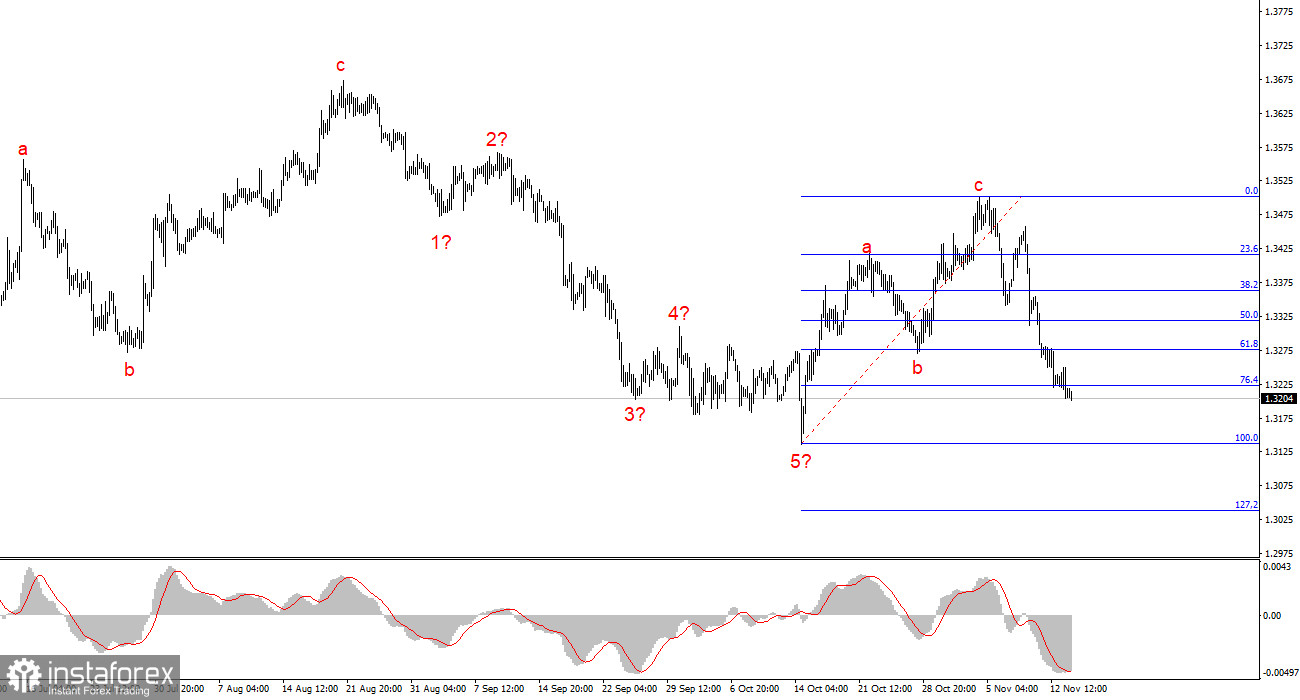
The wave count for GBP/USD continues to indicate the development of a sideways trend segment. The corrective A-B-C-D-E structure is presumed to be complete. If this is indeed the case, a new upward trend segment has begun to develop. However, the pound's latest decline, and particularly the decline in EUR/USD, makes it necessary to consider alternative wave count scenarios. It should be noted that no convincing alternatives to the current wave count are apparent. There are also no compelling reasons to expect the current trend segment to develop into a full-fledged downward trend, with the prospect of further declines in 2027. Nevertheless, demand for the US dollar continues to increase, which could undermine the integrity of the current wave count.
On the lower time frame (top chart), a three-wave structure has emerged, indicating a corrective pattern. Consequently, the pair has moved on to developing a new impulsive wave sequence, which appears to be confirmed by the speed of the downward movement. Accordingly, a new full-fledged five-wave structure can now be expected, with targets below the previous low of 1.3136.
Will the Market Shift Its Focus to the Bank of England?
The GBP/USD pair declined by another 20 points on Friday, bringing its total weekly loss to approximately 130 points. Had it not been for Monday's positive performance, the pound's losses would have been considerably greater. At the beginning of the new trading week, the British currency remains under market pressure and shows no meaningful signs of attempting an upward correction. It is worth recalling that the local wave count for the euro suggests the development of a five-wave structure, two waves of which have not even begun to form. Consequently, the euro could continue to decline. The British pound is also likely to develop a complete five-wave structure and could therefore continue to fall this week. A lot of GBP/USD's movement today will depend on Kevin Warsh's speech.
However, the pound will also have its own fundamental drivers this week. The main consideration is whether the market pays attention to these factors and gives them due consideration. On Wednesday, the UK's most important inflation report will be released. According to official forecasts, the Consumer Price Index could accelerate to 3.6% in October, which would strengthen the market's hawkish expectations regarding further monetary policy tightening by the Bank of England. This data could support the pound, and the higher inflation rises, the greater the likelihood of seeing the British currency appreciate. If inflation comes in below market expectations, demand for the British currency will continue to decline.
In any case, the expectation is that the downward trend segments in both the euro and the pound will be completed, as there are insufficient grounds for expecting further declines. However, the market may need to fully execute its selling strategy before shifting its focus to developing an upward trend segment. If Kevin Warsh disappoints the market today by failing to make hawkish remarks, the flow of short orders could come to a halt.
General Conclusions
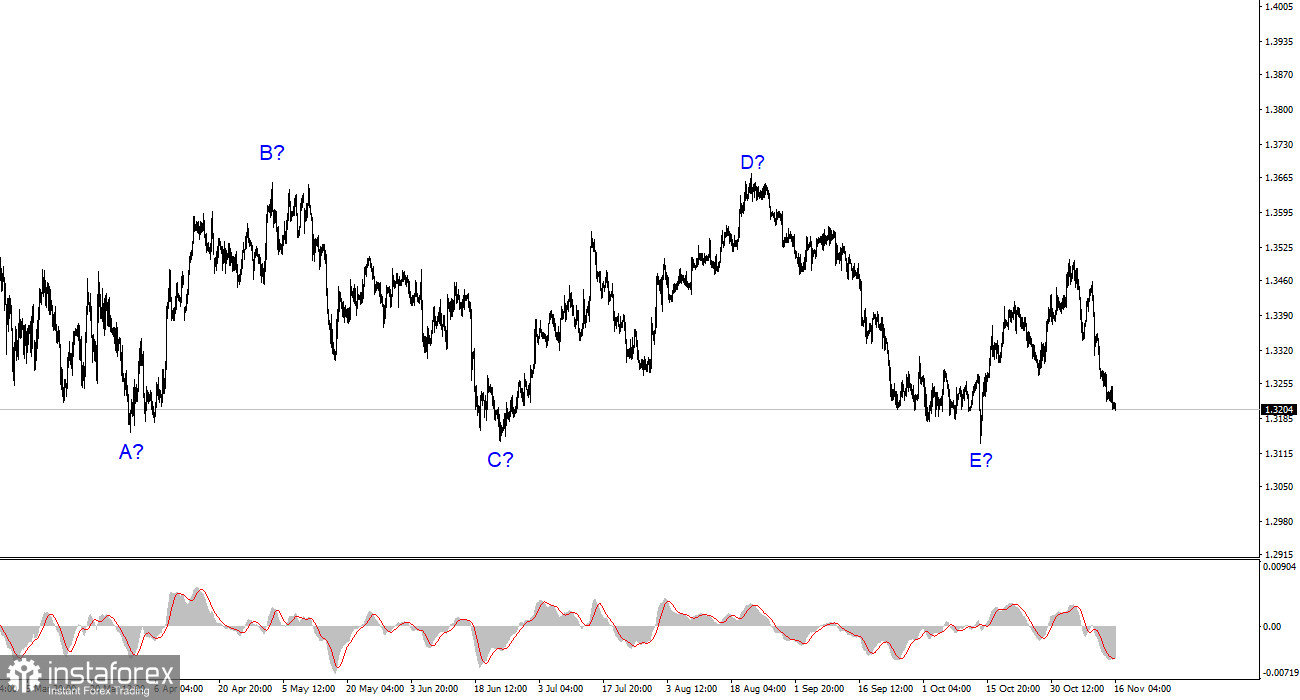
The wave structure of GBP/USD has become quite clear. The higher time frame now shows a corrective A-B-C-D-E structure, which, logically, should already be complete. However, the lower time frame indicates that the downward wave sequence remains unfinished. Consequently, the pound's decline could continue, with targets around 1.3138 and 1.3039, corresponding to the 100.0% and 127.2% Fibonacci levels, respectively. The more the pound declines, the more attention is shifting toward long-term buying opportunities.
The higher-time-frame wave count appears clear. The corrective A-B-C-D-E trend segment is either complete or will be completed in the near future. Of course, any trend segment can develop into a more complex and extended structure, but the most likely scenario is being considered here. At present, there are no convincing reasons to expect another substantial decline in the pound.
The main principles of the analysis:
- Wave structures should be simple and easy to understand. Complex structures are difficult to trade and often involve changes in the wave count.
- If there is no confidence in what is happening in the market, it is better to stay out of the market.
- There can never be 100% certainty about the direction of price movements. Do not forget to use protective Stop Loss orders.
- Wave analysis can be combined with other types of analysis and trading strategies.


