


















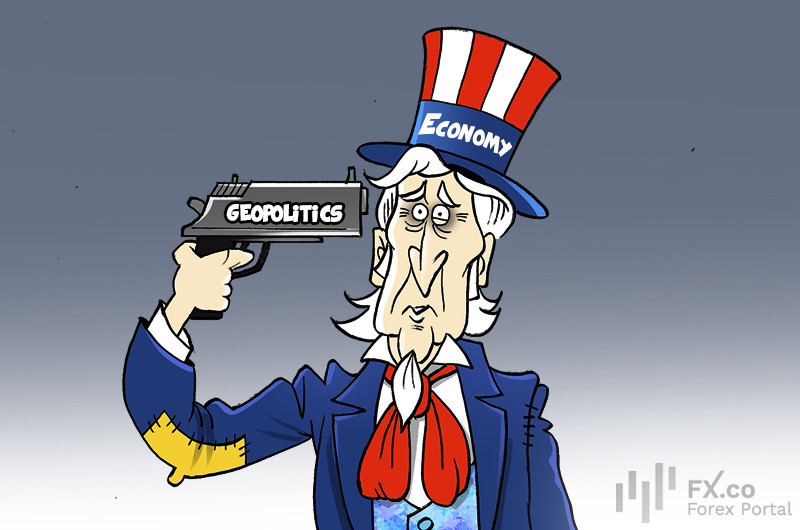
The American economy is showing resilience amid the Middle Eastern crisis, bolstered by increased government spending and robust demand within the technology sector. Barclays forecasts a 2.3% year-over-year increase in US GDP for the first quarter of 2026.
This forecast exceeds the GDPNow estimates by one percentage point due to the normalization of budgetary expenditures following last year's federal government shutdown. The baseline scenario predicts GDP growth of 2.4% for the entirety of 2026 and 1.5% in 2027. A 0.5% decline in industrial production in March is attributed by analysts to volatility in resource extraction, while demand for artificial intelligence equipment remains at record levels.
Consumer spending increased by just 0.8% year-over-year in February, but Barclays expects retail sales to accelerate by 1.3% month-over-month in March. The federal budget deficit could reach $2.0 trillion in 2026 and 2027 due to declining tariff revenues and a substantial rise in defense appropriations. This increase in government spending is expected to counterbalance the impact of geopolitical risks on overall domestic demand.
The Federal Reserve is likely to keep interest rates unchanged at its April 2026 meeting. The central bank has scheduled its first rate cut of 25 basis points for September 2026, with a subsequent cut anticipated in March 2027. However, experts point to the continued likelihood of maintaining tighter monetary policy in light of instability in commodity markets.


