


















The euro again instills confidence to the world and increases its credibility ratings on the financial markets. Speaking at the bankers' gathering in London on May 23, President of the European Central Bank Mario Draghi announced that the EU countries have achieved positive results in eliminating the crisis consequences. "We can ... safely say that our Economic and Monetary Union (EMU) is a more stable union today than it was a year ago," Draghi said.
According to the ECB President, although the situation is still problematic, because the statistics show the economic decline and unemployment growth, there are definitely first fruits. Mr Draghi pointed to three of the weaker eurozone economies - Ireland, Spain, and Portugal - saying they had made "impressive" improvements in their export performances.
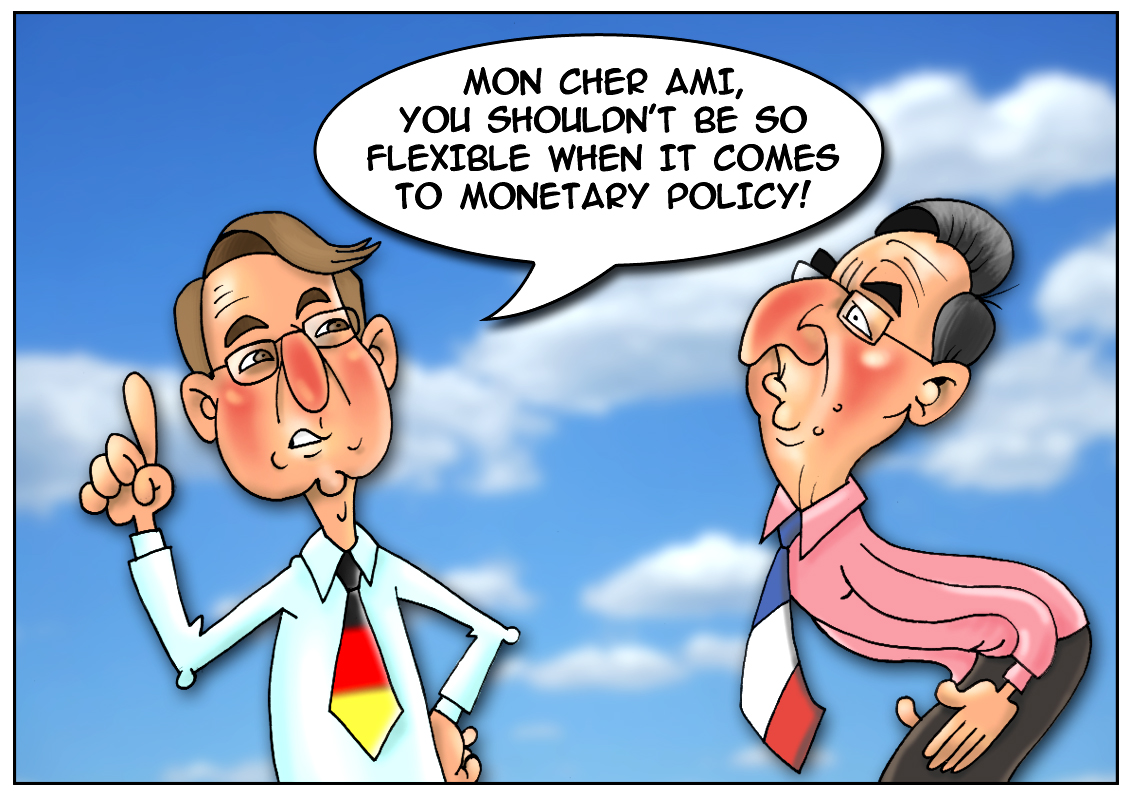
Jens Weidmann, the President of Bundesbank, reminded that Germany cannot support the EU economy on its own. He also urged France to stick to the European Union deficit rules and increase competitiveness. During his visit to Paris on May 23 Weidmann warned the French about too much flexibility in budget problems. Despite the fact that France, one of the strongest economies in Europe, managed to make some progress in reducing the structural deficit, the country will need two more years to get the allowable 3% deficit of GDP.


