


















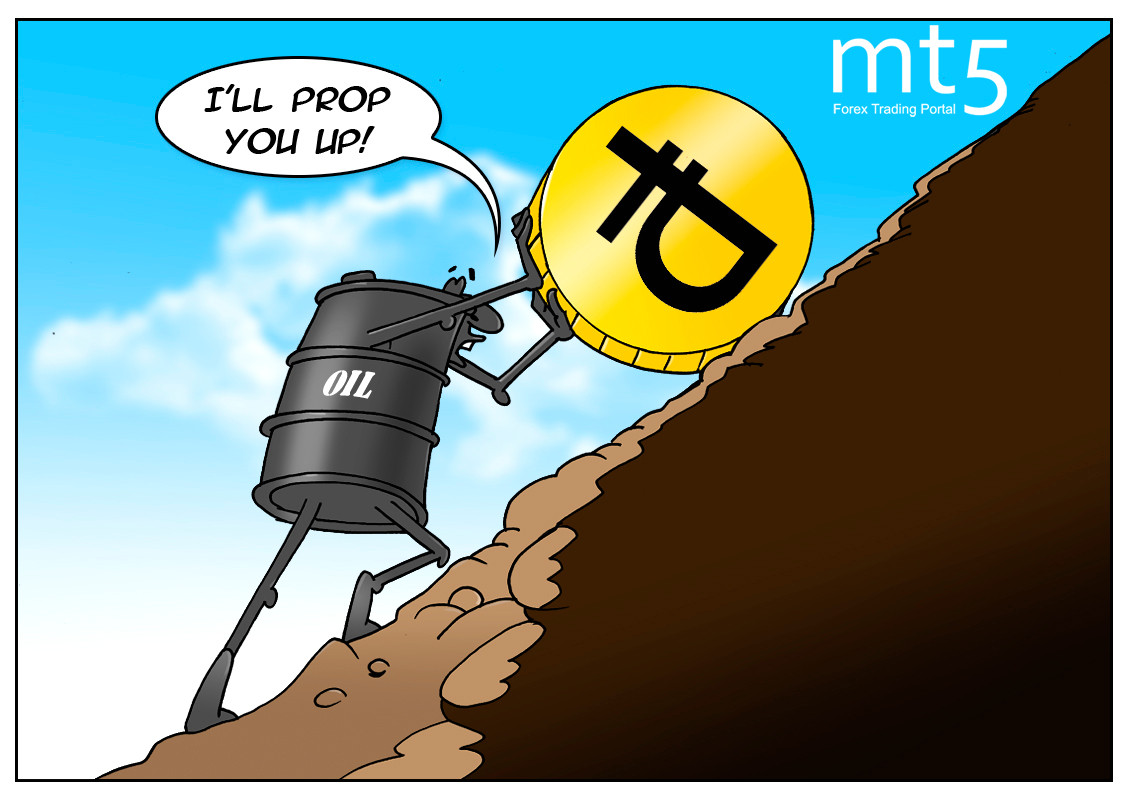
The Russian ruble is an extremely resilient currency. It managed to cope with the oil price war despite some losses. At the moment, oil prices are recovering and the Russian currency is rising as well. On the Moscow exchange, the US dollar is trading at the level of 72 rubles whereas the euro costs less than 79 rubles. The last time the ruble was trading at similar levels was in March. Of course, such a jump was mainly triggered by higher oil prices. May oil futures are already sold off. Moreover, traders are planning to benefit from June contracts that are likely to cost even more. At the same time, oil output reduction is already bearing fruit, and demand is gradually recovering. According to the data received from Bloomberg, China's oil consumption has almost reached its pre-crisis level of 13 million barrels a day. Besides, the climb of the Russian currency is driven by seasonal demand from local exporters. By the end of the month, some of them should pay taxes to the budget whereas the others need the ruble to pay dividends, for example, "NOVATEK" and "Norilsk Nickel". Some experts suppose that the currency sell-off on the exchange could total $2 billion. Thus, the Russian ruble is expected to move even higher.


