


















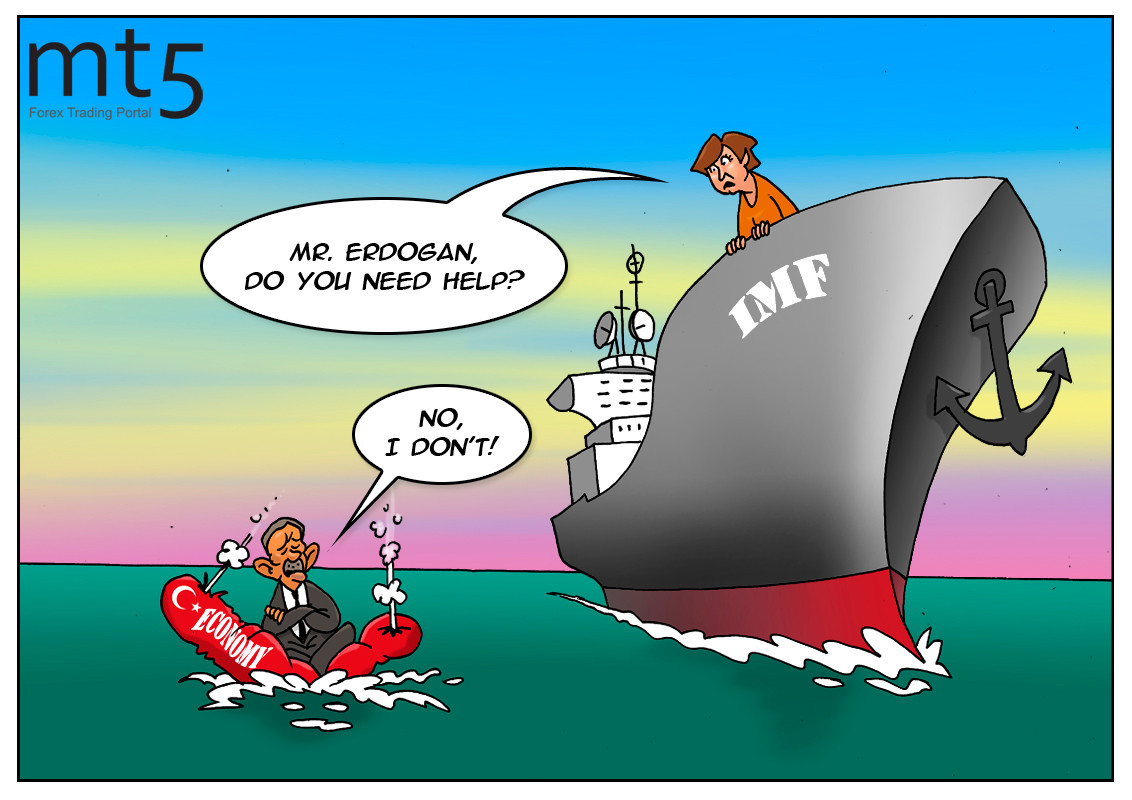
A complex off-balance sheet system or, in layman's terms, personal agreements between Recep Erdoğan, President of Turkey, and the Justice and Development Party went into a downward spiral as expected. The country’s economy is in the state of collapse. The national currency, the Turkish lira, has lost 90% of its value against the US dollar over the past three years. The country’s financial reserves have depleted, while the central bank has completely lost independence. Moreover, investors have lost confidence in Turkey. Major global financial institutions started to question official economic data provided by the country. Meanwhile, it is impossible to receive accurate data or conduct independent monitoring, since even the parliament has no right to check Turkey Wealth Fund. Erdoğan seized power and deprived himself of the opportunity to seek help from international lenders, including the IMF. Any financial aid program implies reforms, involvement of competent politicians, transparency of transactions, and the independence of the regulator rather than countless off-balance sheet arrangements, relatives holding key government positions, and total control. However, if even Erdoğan introduces such reforms, he is likely to lose control over all shady deals that he and his comrades have arranged in recent years. Therefore, Erdoğan finds it easier to reach an inexplicable settlement with Qatar on expanding the swap line. Theoretically, such a deal increases the reserves of the Turkish Central Bank to $15 billion from $5 billion. Practically, the regulator receives no money at all.


