


















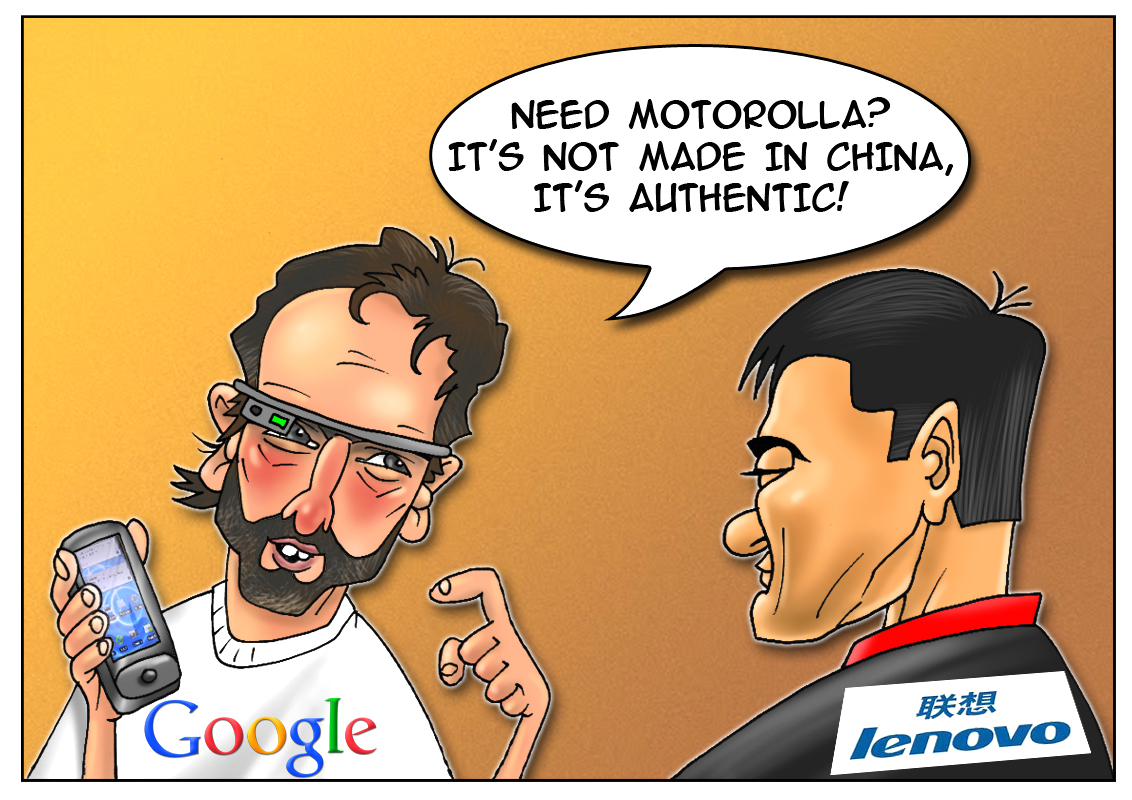
Another European company changed its citizenship. Motorola, which is now owned by Google, is going to be sold to Lenovo. After the lengthy negotiations, the parties came to a decision and announced the upcoming deal of $3 billion. Along with Motorola, the Chinese electronic company will get more than 10,000 different patents for applications and software. So, Lenovo will be able to enter the U.S. market to compete with the renowned giants like Apple and Samsung. Selling Motorola, Google gives up its attempts to create its own mobile device. Google Inc. paid $12.5 billion for the handset maker in 2012 hoping to launch its branded line of mobile devices with the voice recognition option. In August 2013, Motorola Mobility together with the giant even presented their new phones Moto X, but the consumers did not welcome the novelty and the project was wound down. Meanwhile, Lenovo is buying up assets trying to settle in for the computer manufacturing market. That is the second large deal for Lenovo as recently the Chinese electronics maker acquired IBM's x86 server business for $2.3 billion. The Asian conquest of the world's market is coming out. The huge domestic sales allow Lenovo to invest money in order to increase its presence on the markets outside the region. In 2013, the three key producers of handsets (Huawei, ZTE Corp, and Lenovo) are considered the industry leaders. Despite the fact that the above-mentioned companies feel good in Asia, they have not managed yet to conquer the jaded U.S. consumers. The fact is that the Americans still think that the Chinese output is downscale and unsafe for health. For comparison, in Q3 2013 the sales of ZTE and Huawei come in at 5.7% and 3% respectively in the United States, while Apple and Samsung account for 36.2% and 32.5% correspondingly. To date, this difference remains significant.


