


















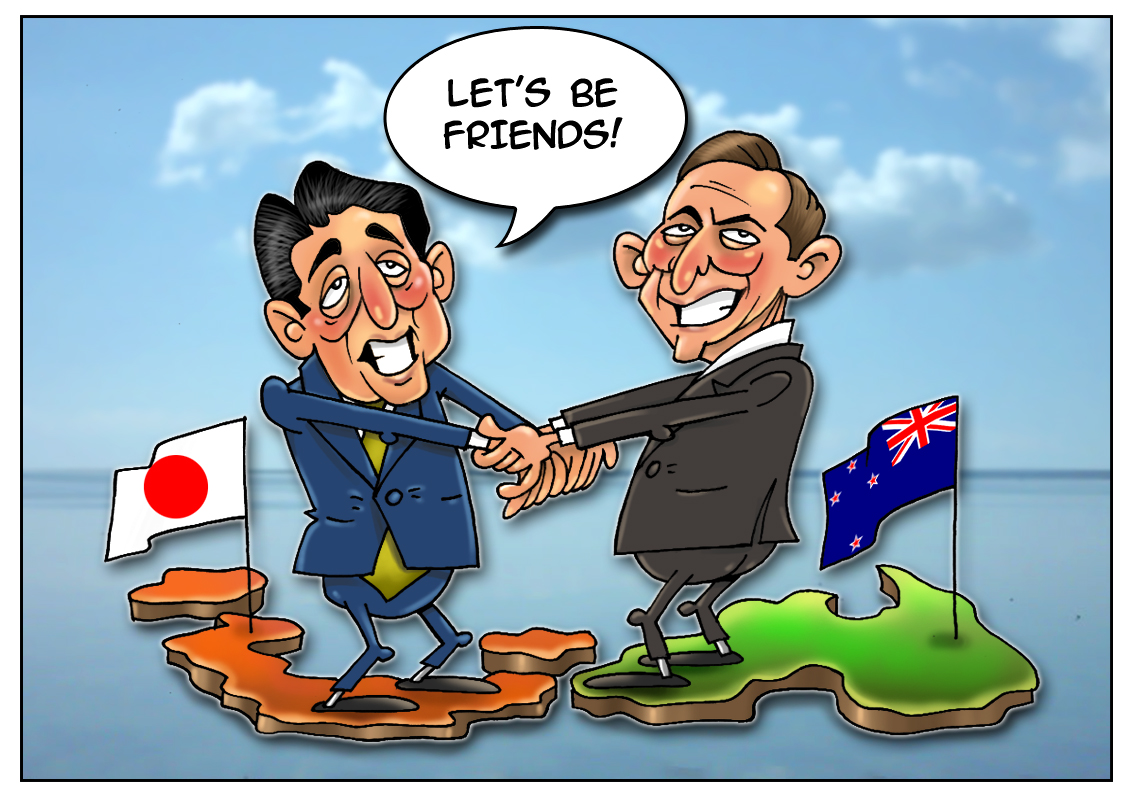
The international economic relations depend a lot on the global political situation. So today, many countries are reviewing their partnership proposals in the light of world’s financial and political instability. Recently, Australia and Japan have announced a free trade agreement after seven years of negotiations.
Australia will cut duties on Japanese cars, electronics, and household appliances. Japan, in its turn, will lower tariffs on Australian beef and raise duty-free quota on cheese. The trade deal has been already designated as a historical one. "This is the first time that Japan has negotiated a comprehensive economic partnership agreement or free trade agreement with a major economy, particularly a major economy with a strong agricultural sector," Australia’s Prime Minister Tony Abbott stated.
The agreement is to be prepared by the end of the year and signed during Shinzo Abe’s official visit to Australia. Besides, the document might stir up the negotiations on Trans-Pacific Partnership, another trade agreement, which is supposed to gather 12 countries, including the United States, Japan, and Australia. It is important to remember that the debates reached deadlock after the dispute between Tokyo and Washington escalated. Now, when Australia made a concession, the U.S. authorities are likely to seek a compromise more actively. Japan, which is considered to be the third largest economy in the world with a GDP of over $6 trillion, is about to become the second biggest trade partner of Australia after China.


