
















FX.co ★ How years of practice change people


How years of practice change people
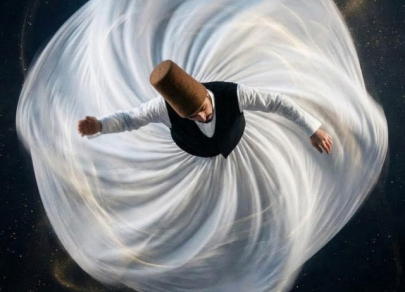
Dancing dervishes — triumph over vestibular system
Sufi spinning, known as the Sama ceremony, is a multi-hour meditative dance. Dervishes can rotate more than 30 revolutions per minute for several hours without dizziness or nausea. The technique relies on years of training of the vestibular system and on a specific head position that reduces irritation signals from the inner ear. From a scientific view, this is a striking example of neuroplasticity. The practitioner’s brain learns to ignore rotation signals while preserving coordination and mental clarity.
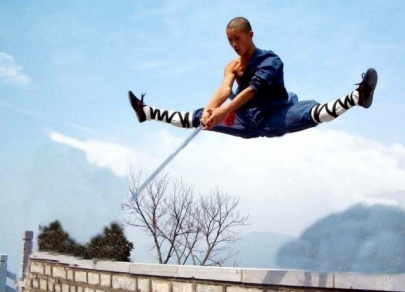
Shaolin monks — bodies tougher than steel and stone
The “iron shirt” practices of Shaolin monks demonstrate extreme resistance of the human body to physical impact. Through years of qigong, conditioning, and specific hardening methods, monks learn to absorb blows and pressure that would be lethal to an ordinary person. The training involves work on the nervous system as well as the body. Shaolin discipline shows how the body can be transformed into near-impenetrable armor able to withstand extreme loads without lasting harm.
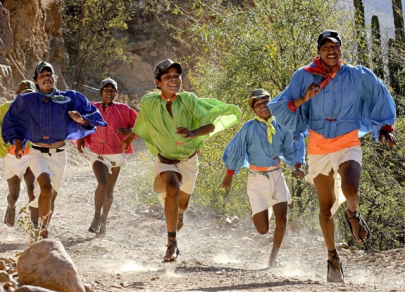
Tarahumara tribe — running beyond fatigue
The Tarahumara people, who live in Mexico’s Copper Canyon, call themselves raramuri, meaning “running people.” They can cover distances of 200 kilometers or more over rugged mountain terrain without stopping and remain in good spirits. Their endurance relies on unique running mechanics, diet, and a culture in which running is integral to life. Their hearts and lungs operate with an efficiency that exceeds that of many professional marathoners.
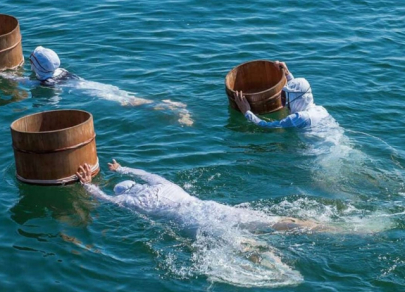
Ama divers —lungs of sea
Japanese Ama divers have harvested shellfish and pearls for two thousand years. They dive to depths of up to 30 meters without equipment. These women can hold their breath for several minutes while working in cold water. Ama divers train a breathing technique called iso-bue, the “whistle of the sea,” which helps restore heart rhythm after surfacing. The community demonstrates how long-term practice alters physiology, allowing people to function in the marine environment as naturally as on land and to remain professionally active into advanced age.
Indian yogis — control of life rhythms
Advanced practitioners of pranayama in India show remarkable control over the cardiovascular system. Cases have been recorded in which yogis in deep meditation slowed their heart rate and breathing to minimal levels, approaching a state similar to anabiosis. They achieve this through total control of the vagus nerve and relaxation of every muscle. The practice minimizes oxygen and energy use and can allow a person to remain in confined conditions without harm.
Kyudo masters — seeing without eyes
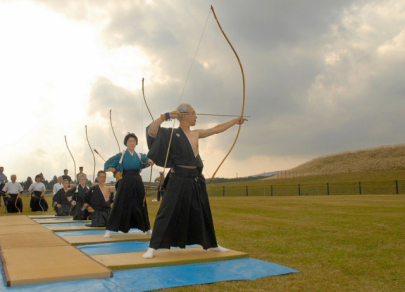
In its highest form, the Japanese art of kyudo is not a sport but a spiritual discipline. Masters can hit a target with closed eyes or in complete darkness, relying on zanshin (continuous awareness) and mushin (absence of thought). The archer does not aim in the usual sense. They sense unity with the bow and the target. This is an example of expanded sensory perception in which intuition and motor memory replace vision. Kyudo trains practitioners to achieve results through inner balance.
Mnemonists —limitless memory archives
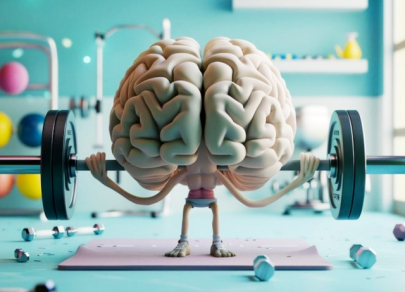
There are groups and professional communities of mnemonists who, through training, develop the ability to memorize vast volumes of information. They can recite tens of thousands of digits of pi or recall the order of cards in dozens of decks after a single viewing. On a physical level, their brains change the structure of neural connections and create efficient pathways for encoding data. Human memory has no fixed hard limit. Its capacity depends on the algorithms and methods used to process information.
Maasai warriors —energy of vertical jump
The ritual Adumu dance performed by young Maasai warriors includes a series of exceptionally high vertical jumps. Without a run-up and maintaining a perfectly straight body, warriors launch into the air to display leg power and endurance. This ability results from specific training of tendons and muscles from an early age. Their legs act like powerful springs, storing and releasing energy instantly. The Maasai can sustain the jumping tempo for extended periods, which requires extraordinary cardiovascular performance.



