FX.co ★ Biodesign: how nature replaces furniture factories


Biodesign: how nature replaces furniture factories
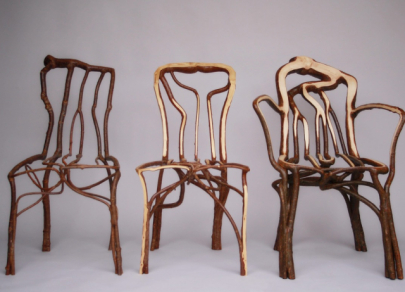
Grown chairs —Full Grown project
Designer Gavin Munro changed the rules by growing chairs rather than cutting trees for furniture. Using special frames, young willow or oak shoots are guided and grafted together in the field. After several years, a monolithic chair appears with no nail and no drop of glue. Such furniture lasts for decades and carries the energy of living wood. It is a long‑term investment in design that grows with the owner and reminds people of patience and harmony with nature.
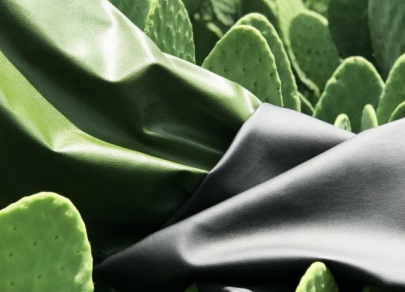
Cactus leather — luxury and quality
The Mexican project Desserto made high‑quality leather from nopal cactus leaves. Unlike animal leather or plastic leather substitutes, cactus leather requires minimal water and contains no plastic. Sofas and armchairs upholstered in this material are highly durable, breathable, and pleasant to the touch. For the luxury industry, this was a rescue. Brands can now create premium interiors without harming ecosystems. In 2026, cactus leather became a standard for luxury labels.
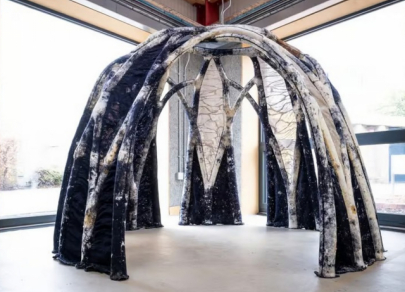
Mycelium — fungal concrete in your living room
Mycelium, the root network of fungi, is a supermaterial of the future. Makers place a substrate of agricultural waste into molds. Within weeks, the mycelium colonizes the form, binding particles into ultra‑strong, lightweight, and fire‑resistant blocks. Chairs and tables made from mycelium have a velvety surface and surprising strength. At the end of life, the furniture can be broken up and buried in a garden. It will become compost. This is the triumph of a product that returns to the natural cycle.
Bioluminescent lamps — living light without wires
Designers learned to harness the natural glow of some marine bacteria and algae. Colonies of microorganisms live inside glass tubes. They feed on carbon dioxide and sunlight by day and emit a soft, magical glow at night. Such a lamp also helps clean indoor air. This is a functional symbiosis in which a piece of furniture becomes a living household companion that requires care to keep lighting the space.

Bacterial cellulose — furniture from kombucha
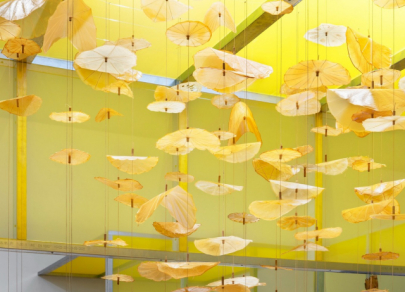
The kombucha culture produces a layer of tough material that resembles parchment or thin leather. Designers use this process to make lampshades, partitions, and decorative elements. The material is grown in vats of tea and sugar and takes on the shape of the mold. Bacterial cellulose is fully translucent to light, creating unique visual effects in interiors. This is the most accessible form of biodesign and can be implemented even in an urban apartment.
Calcite — coral as architectural element
Using mineral precipitation from seawater under a weak electric current (Biorock), designers grow “living stone” for underwater hotels and coastal villas. The material becomes harder than concrete and continuously repairs itself. By 2026, elements made from cultivated calcite signaled technological prowess and ecological awareness. These are structures and furnishings that grow stronger over time, extracting calcium carbonate from the surrounding water for their growth.

Textiles from seaweed
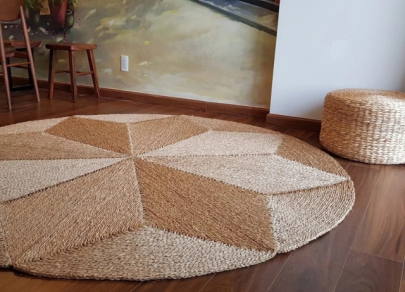
Fibers from brown kelp became the basis for carpets and curtains with antibacterial properties that enrich indoor air with iodine. Seaweed cultivation requires no land and no fertilizers, which makes this textile among the most sustainable in the world. The fabric feels silky to the touch and is naturally fire‑resistant. Using marine resources in interiors lets homes feel like seaside resorts where every material promotes occupant health.
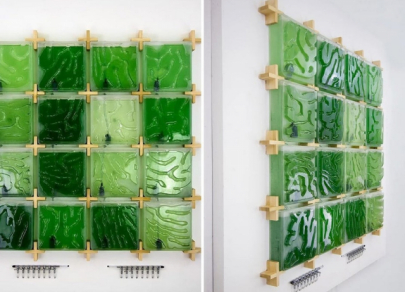
Living walls — photosynthesis in bedroom
Instead of wallpaper, panels with microalgae (Chlorella) can be used. These living pictures actively absorb carbon dioxide and produce oxygen at volumes comparable to an adult tree. The wall is controlled via an app. You can change its color intensity by adjusting the light and nutrient supply. In 2026, such a wall is not mere decor. It is a life support system that makes the air in an urban apartment as clean as that in a coniferous forest.