FX.co ★ Nobel 2026: Major laureates announced—Trump again overlooked for Peace Prize


Nobel 2026: Major laureates announced—Trump again overlooked for Peace Prize
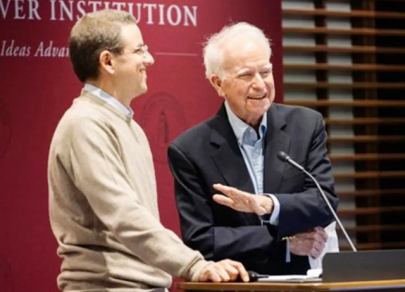
Francis Halzen: ice telescope IceCube
The 2026 Nobel Prize in Physics went to American Francis Halzen for creating the IceCube neutrino observatory at the South Pole. Halzen turned a whole cubic kilometer of Antarctic relic ice, down to depths of 2.5 km, into a giant optical detector. More than 5,000 optical modules record Cherenkov radiation—microscopic blue flashes of light that appear when elusive ultra‑high‑energy cosmic neutrinos collide with water molecules inside the ice.
Anne Carson: ancient tragedy in avant‑garde language
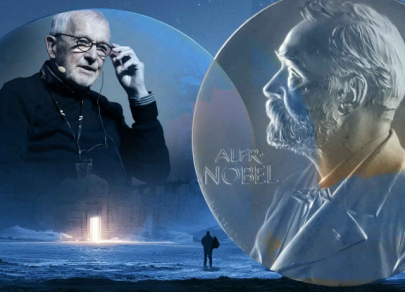
The Nobel Prize in Literature was awarded to Canadian writer, poet, and classical philologist Anne Carson. The Swedish Academy cited her “for her bold and inventive oeuvre that, in playful dialogue with the classical tradition, has created new forms for contemporary literature.” Carson masterfully translates Euripides and Sappho, transforming Greek tragedies of passion, war, and loss into polyphonic novels in verse, collages, and philosophical essays. Her prose probes the nature of human grief and memory, proving the inseparable continuity between classical antiquity and events of the twenty‑first century.

Peter Hegemann and Georg Nagel: key to nerves
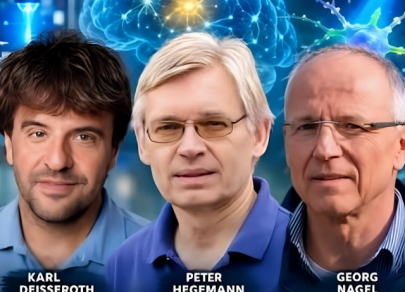
German biophysicists shared the Nobel Prize in Medicine for discovering the basic mechanism that made optogenetics possible. They discovered and studied channelrhodopsins—unique proteins from single‑celled green algae that react to photons of light and allow ionic currents to pass. Nagel and Hegemann proved that this plant mechanism can be transferred into animal cells, making neurons respond instantly to light. Combining fundamental biophysics with Deisseroth’s methods gave humanity the key to optical control of living nervous systems.
Karl Deisseroth: laser control of neurons
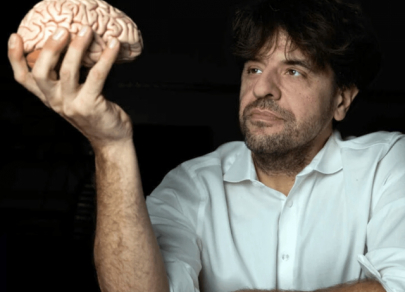
American neuroscientist and psychiatrist Karl Deisseroth received the Nobel Prize in Medicine for creating optogenetics—a method that has revolutionized brain research. Deisseroth learned to insert light‑sensitive proteins into the membranes of specific neurons, enabling scientists to activate or silence cortical areas with flashes of blue laser light delivered through ultrafine optical fibers. This allowed sniper‑precision mapping of the brain circuits of fear, aggression, sleep, and addiction. The method transformed neurobiology from a descriptive science into a precise engineering discipline.
Henri Kagan: nonlinear control of mirror reactions
The 2026 Nobel Prize in Chemistry went to French organic‑synthesis master Henri Kagan. He investigated asymmetric catalysis and discovered nonlinear effects in chemical reactions. Many biological molecules exist in two mirror‑image forms—left and right enantiomers. Kagan showed that even with an imperfect, contaminated catalyst, a reaction can, via nonlinear effects, dramatically amplify the purity of the desired mirror isomer, opening the way to precise manipulation of molecular geometry.
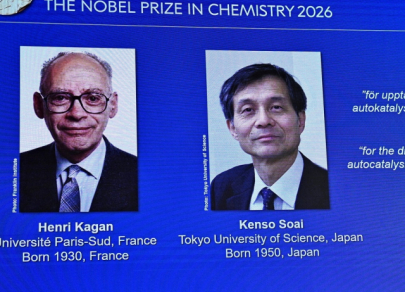
Kenso Soai: mystery of life’s origin
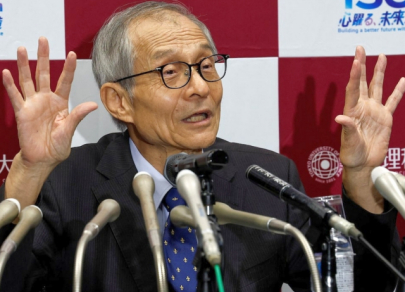
Japanese chemist Kenso Soai shared the Nobel Prize in Chemistry for discovering the phenomenon that now bears his name—the Soai reaction. He first experimentally demonstrated asymmetric autocatalysis: the product of its own synthesis acts as the catalyst for producing further exact mirror copies. A minute initial bias of 0.00001% is enough for the reaction to avalanche and suppress the opposite isomer. Soai’s discovery brought science closer to solving a fundamental mystery: why terrestrial life is homochiral (DNA is right‑handed while amino acids are left‑handed).
Hall and Woodford: microeconomics versus macro crises
The Nobel Prize in Economic Sciences went to Americans, Robert Hall and Michael Woodford. They were honored for creating the microfoundations of macroeconomic stabilization. The researchers built mathematical models explaining how the behavior of individual households and firms transforms into inflation spikes and employment crises. Woodford’s work underpins modern inflation‑targeting strategies (the tool currently used by the Fed and the ECB), giving central banks precise formulas for setting interest rates amid nonstandard price shocks.