


















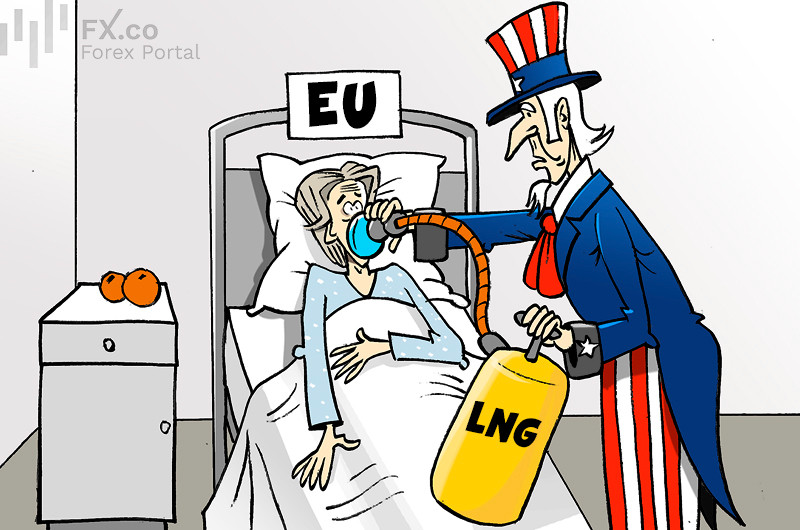
The European Union risks falling into a critical dependence on supplies of US liquefied natural gas as global energy markets are restructured, industry experts said.
Rihard Kvasnyovsky, head of the Slovak Gas and Oil Union, warned of a new structural vulnerability in the European economy. He said US fuel now accounts for more than 50% of the EU’s total LNG imports. It is a concentration that poses a direct threat to the bloc’s energy security by reducing diversification and flexibility in supplier choice.
Macro data confirms an aggressive expansion by US companies into European markets. Figures from the US Department of Energy show exports of liquefied natural gas rose 21% year-on-year in February, reaching about 14 billion cubic meters. EU countries have become a premium selling market for North American producers, allowing US firms to lift operating margins substantially.
The dominance of US cargoes is the predictable result of a shift away from pipeline deliveries toward seaborne shipments in Europe’s industrial sector. The new market architecture is prompting a large capital outflow from Europe and generating outsized returns for the US energy sector through higher export volumes. If the trend continues, Europe’s production capacity will be exposed to transatlantic logistics costs and to any future changes in Washington’s trade policy.


