


















At the end of last week, there was an increase in the US dollar, which allowed to observe the formation of the reversal pattern on the junior time frame. The purpose of the downward movement is a weekly short-term fault of 1.2932-1.2899.
Medium-term plan.
Last week, a corrective model was formed, which allows us to consider a further decline in the exchange rate to the weekly short-term fault of 1.2932-1.2899. In the current situation, the probability of forming a medium-term accumulation zone increases, where weekly extremes will come to the fore. The upward movement is still a medium-term momentum, however, to continue the growth, it may be necessary to obtain more favorable prices for the purchase.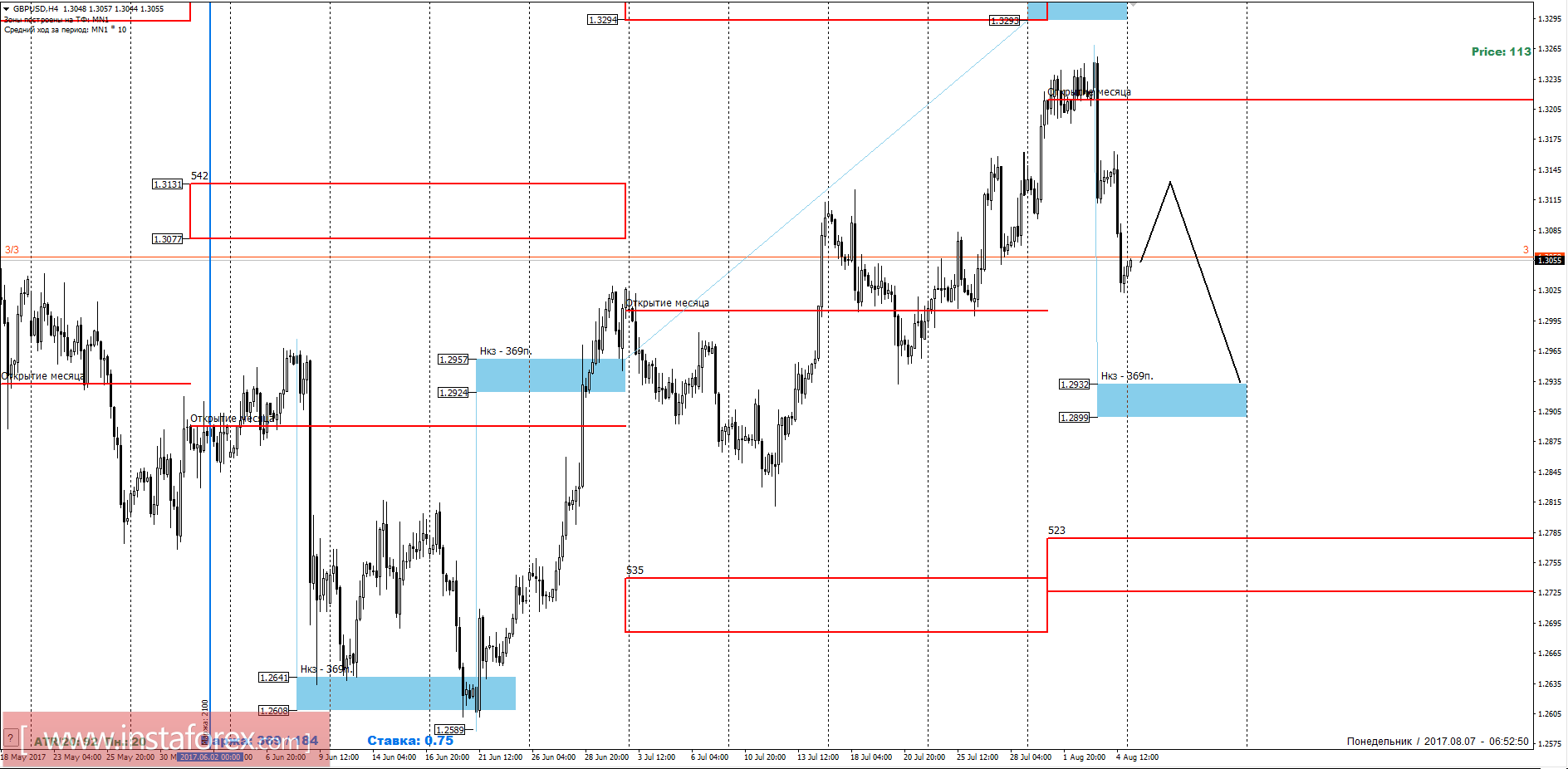
To form an alternative model, the absorption of the last fall of the pair will need to be absorbed and the price fixed above the opening level of the August auction. This will allow talking about continuing medium-term growth with high potential.
Intraday plan.
Today's determining resistance is NCP 1/4 1.3115-1.3107. The test of this zone will allow you to get favorable prices for the sale of the instrument. The zone is within the intraday movement, which makes it an excellent target. The target zone of the top-down priority model is the weekly short-term fault of 1.2932-1.2899. The probability of reaching this range is 70%. To disrupt the downward model, the pairing above the NCP 1/2 1.3207-1.3191 will be required at one of the American sessions. This will allow talking about the continuation of an upward medium-term impulse.
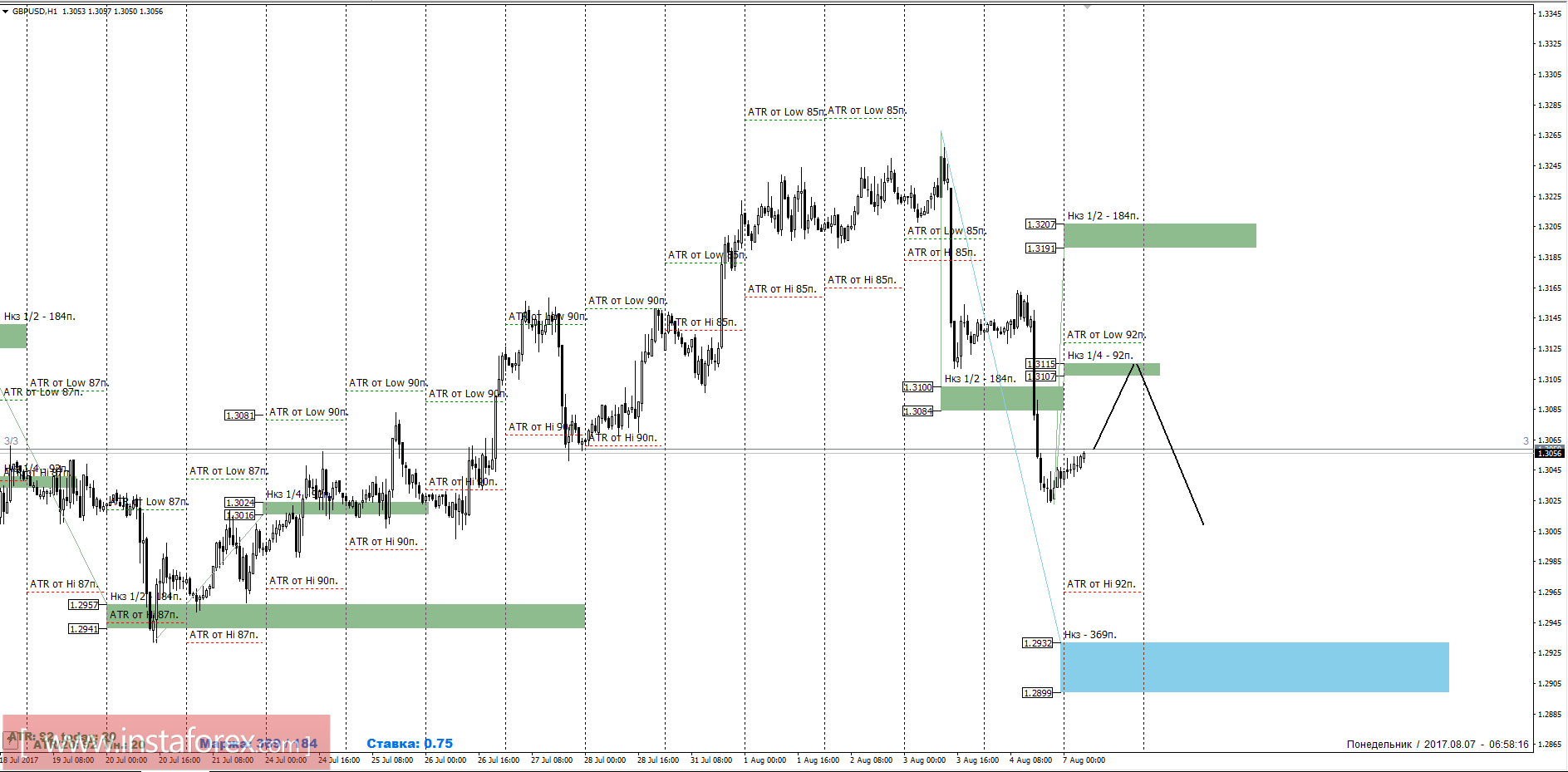
Daytime short-term fault is the daytime control zone. The zone formed by important data from the futures market, which change several times a year.
Weekly short-term fault is the weekly control zone. The zone formed by important futures market marks, which change several times a year.
Monthly short-term fault is the monthly control zone. The zone, which is a reflection of the average volatility over the past year.


