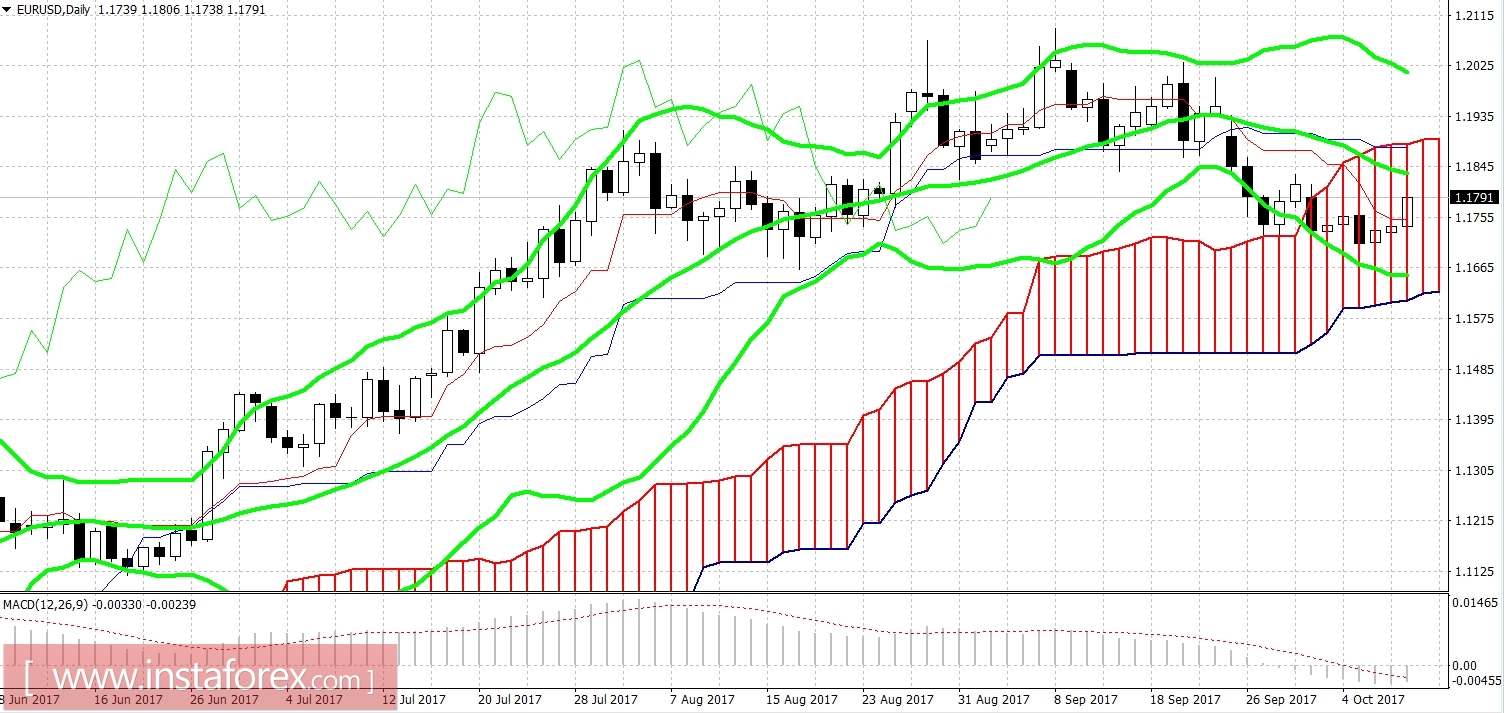
The euro-dollar pair is struggling to recover its lost positions this week. The referendum in Spanish Catalonia and the "hawkish" mood of the Fed ended the months-long growth of the European currency, and the EURUSD pair demonstrated a corrective decline, having dropped by almost 300 points since the end of September.
However, the 16th figure proved that the strength of the bears of the pair is insufficient: despite numerous breakthroughs, the price remained in the 17th level, where it is traded today. And although the market neglected record-low nonfarm payrolls, traders did not rush to buy the dollar: a new round of geopolitical tensions raises questions about the further growth of the US currency.
The fact is that the South Korean press, citing government sources, reported that Kim Jong-un is preparing to conduct another nuclear test and rocket launch. And this should happen in the very near future - until October 18. The particular concern of investors is the fact that this time North Korea plans to test a long-range missile. Although opinions of experts on this issue diverge, many of them are believe that a North Korean missile can reach the territory of the western coast of the United States. In addition, representatives of the DPRK have repeatedly stated that they are considering the possibility of a "preventive" missile strike against US military installations on the island of Guam in the western Pacific. Such actions will inevitably lead to harsh retaliatory actions on the part of the Americans, given the aggressive rhetoric of Donald Trump.
In the context of the currency market, these events mean one thing: the defensive assets will again be in demand amid a flight from risk. Today's dynamics of gold, franc and Japanese yen growth indicate that this process is already gaining momentum. The European currency, which has also recently been considered a funding currency, is in a hurry to restore its positions. Indirect support for this process was provided by an index of confidence in the business sector of the eurozone, which yesterday came at a multi-month high.
Also, the market is gradually moving away from the issue of the Catalan referendum, although the problem itself is not yet resolved. Catalonia does not dare to declare the independence of its region against the backdrop of numerous protests in favor of unity with Spain, which took place in the main Catalan city of Barcelona. In addition, the further steps of the government of the region also look very vague, given that Spain and the European Union have not recognized the legality of the referendum. And yet, according to some sources, the head of the Catalan government Carles Puigdemont today can make a decisive statement. The probability of this event is 50/50, since the extraordinary session of parliament has been repeatedly postponed - apparently, the supporters of independence lack political will because of the lack of unanimous support of the Catalans.
In other words, the Spanish political crisis has moved into a drawn-out stage and the market has gradually focused its attention to other aspects. Particularly at the industrial production in Germany, which rose last month at the highest rate over the past six years. In addition, a member of the ECB's executive board, Sabine Lautenschlaeger, recently announced that she is in favor of completing the program of purchasing assets next year. Against a backdrop of pessimism, these factors helped the euro to recover slightly, and paired with the dollar, it got close to the 18th figure.
An additional impetus to the pair may be linked to the minutes of the last meeting of the Fed, which will be published tomorrow. The September meeting was rather "hawkish", like the subsequent statements of Janet Yellen. However, the high expectations of the market may again not be justified. As for the December rate hike, no one doubts that confirming this move will surprise no one. But the prospect of a triple increase next year does not look as confident as it initially seemed. Yellen's "hawkish" attitude no longer has its former significance, since she (most likely) will not remain for the next term and will leave office in the coming months.
Will the new head of the Federal Reserve be also be decisive? And who will be the successor to Yellen? And what are the general sentiment among members of the U.S. central bank? These issues, which do not yet have a response, exert additional pressure on the dollar. However, the published minutes of the September meeting will allow markets to assess the overall mood of the Fed, in the context of the latest inflation data (since the disappointing nonfarm payrolls were published after this meeting). Any note of indecision will be unconditionally used against the dollar, which will give the EURUSD pair an additional impetus for its growth.