


















GBP/USD
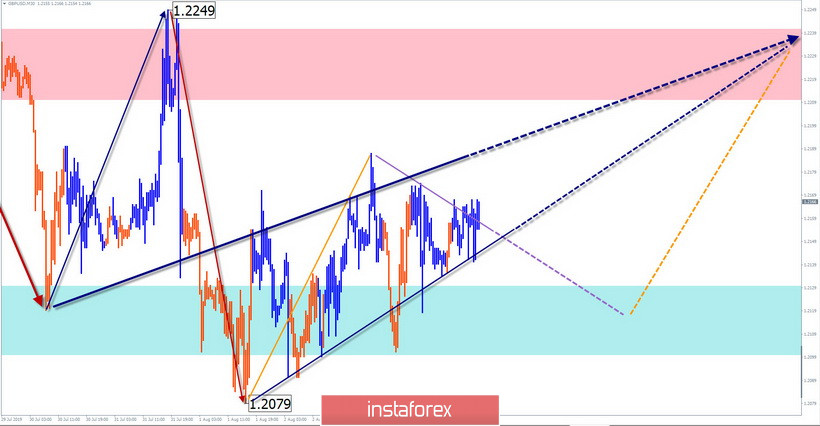
The bearish trend of the English currency is medium-term, set by a wave from mid-March. Its final section has been counting since June 25. By the current day, the wave structure looks complete. The price reached the upper limit of the support zone of a large TF.
Forecast:
In the coming days, it is expected to form a corrective phase of the movement, which is necessary both to continue the current trend and to change its course. The preliminary target level is in the area of 125th of the price chart. Today, a flat is likely between the nearest oncoming zones. Before the price rise in the morning, a decline is possible.
Recommendations:
For long trades, it is safest to wait until the current correction is completed and look for sell signals at its end. In the case of intra-session style of trading, short-term purchases of the instrument are possible.
Resistance zone:
- 1.2210/1.2240
Support zone:
- 1.2130/1.2100
USD/CHF
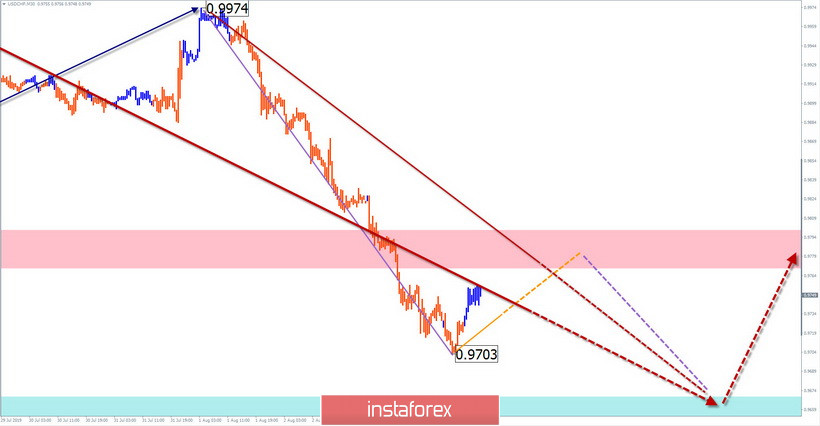
The unfinished wave structure on the chart of the Swiss franc is ascending, with a benchmark on June 25. The counter wave of July 9 does not go beyond the correctional part (B). The price has reached a wide support area of a large scale chart.
Forecast:
The structural features of the current wave make it possible to wait for a puncture of the starting point of the entire model. At the next sessions, the completion of the rollback is expected, the formation of a reversal and the beginning of the price move down.
Recommendations:
When buying a pair today, you should be careful because of the limited lifting potential. In the area of the resistance zone, it is recommended to monitor the signals of the instrument sale.
Resistance zone:
- 0.9770/0.9800
Support zone:
- 0.9700/0.9670
Explanations to the figures: Waves in the simplified wave analysis consist of 3 parts (A-B-C). The last unfinished wave is analyzed. Zones show areas with the highest probability of reversal. The arrows indicate the wave marking according to the method used by the author, the solid background is the formed structure, the dotted ones are the expected movements.
Attention: The wave algorithm does not take into account the length of time the instrument moves.


