


















Anyone planning to bet against the S&P 500 should consider the strength of the American economy and the ongoing enthusiasm surrounding artificial intelligence. The US has proven to be more resilient to tariffs than previously thought. The OECD has raised its GDP forecasts by 0.2 percentage points to 2% for 2025 and 1.7% for 2026. Enormous investments in artificial intelligence are boosting gross domestic product as well as stock price growth. Americans are becoming wealthier and continue to spend.
OECD Forecasts for US Economy and Other Countries
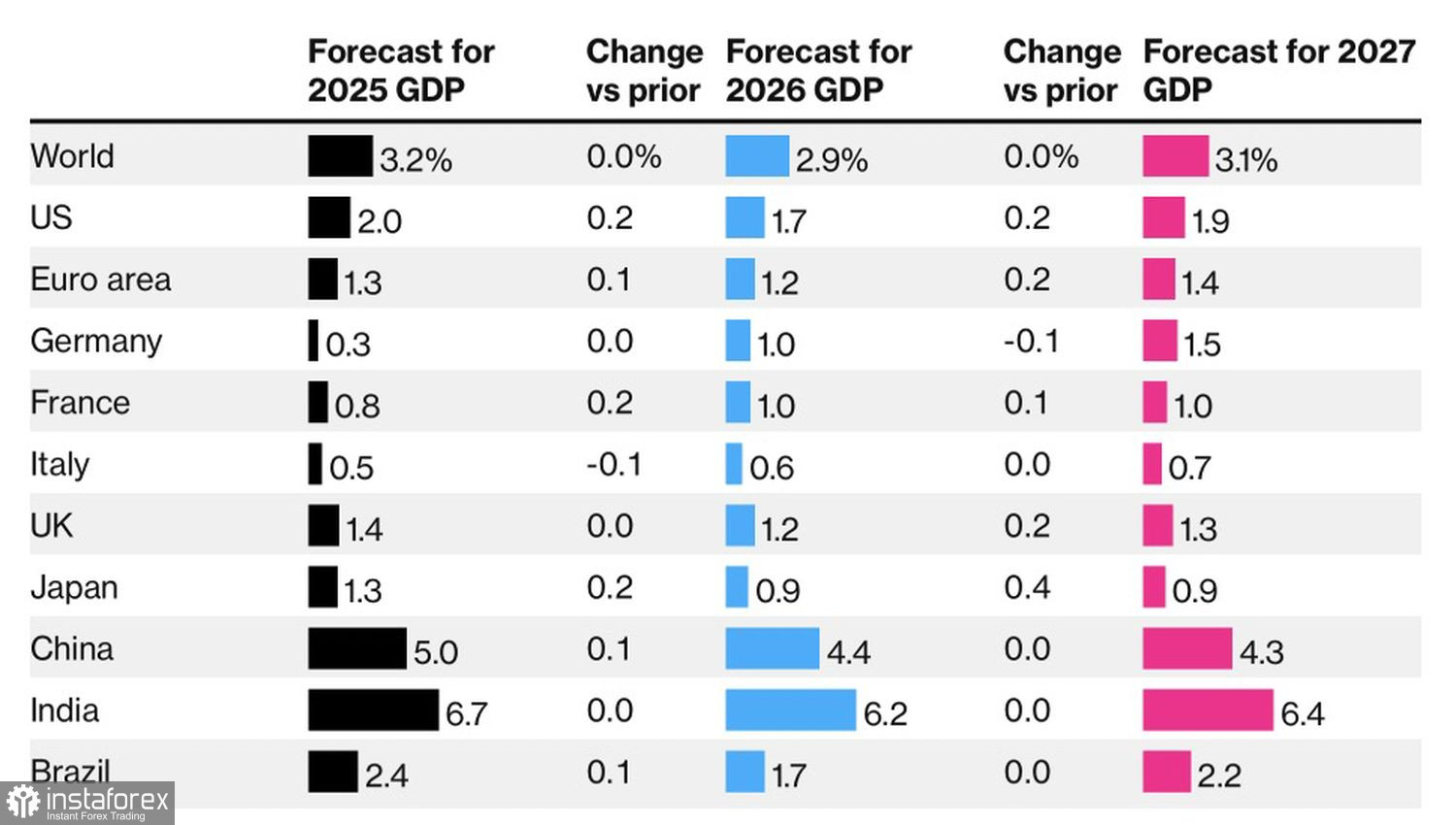
According to 22V Research, increased consumer spending and investments in AI technologies will support productivity and allow S&P 500 companies to generate profits. Strategas Asset Management estimates that profits will grow by 12.5% in the next 12 months. Despite a decline in consumer confidence, Americans are still spending money. This may be associated with the wealth effect; as the broad stock index rises, the average American feels more affluent.
To sell the S&P 500, one must be confident in two things: a significant cooling of the US economy in 2026 and a loss of faith in artificial intelligence. Doubts exist in both areas. The US is currently ranked 14th among the largest stock markets, both in national currencies and in dollar terms. The inefficiency of their stock indices gives grounds for reflection. Has the AI technology phenomenon, which became the main driver behind the rally from 2022 to 2024, run its course?
Regarding potential weakness in the US economy in 2026, optimists have a factor that could assist the Fed. The worse things get for the United States, the higher the likelihood of substantial monetary stimulus. However, the muted reaction of the S&P 500 to the outcomes of the recent FOMC meetings suggests a decreasing dependence of the stock market on the dynamics of the federal funds rate.
Dynamics of S&P 500 Sensitivity to FOMC Meetings
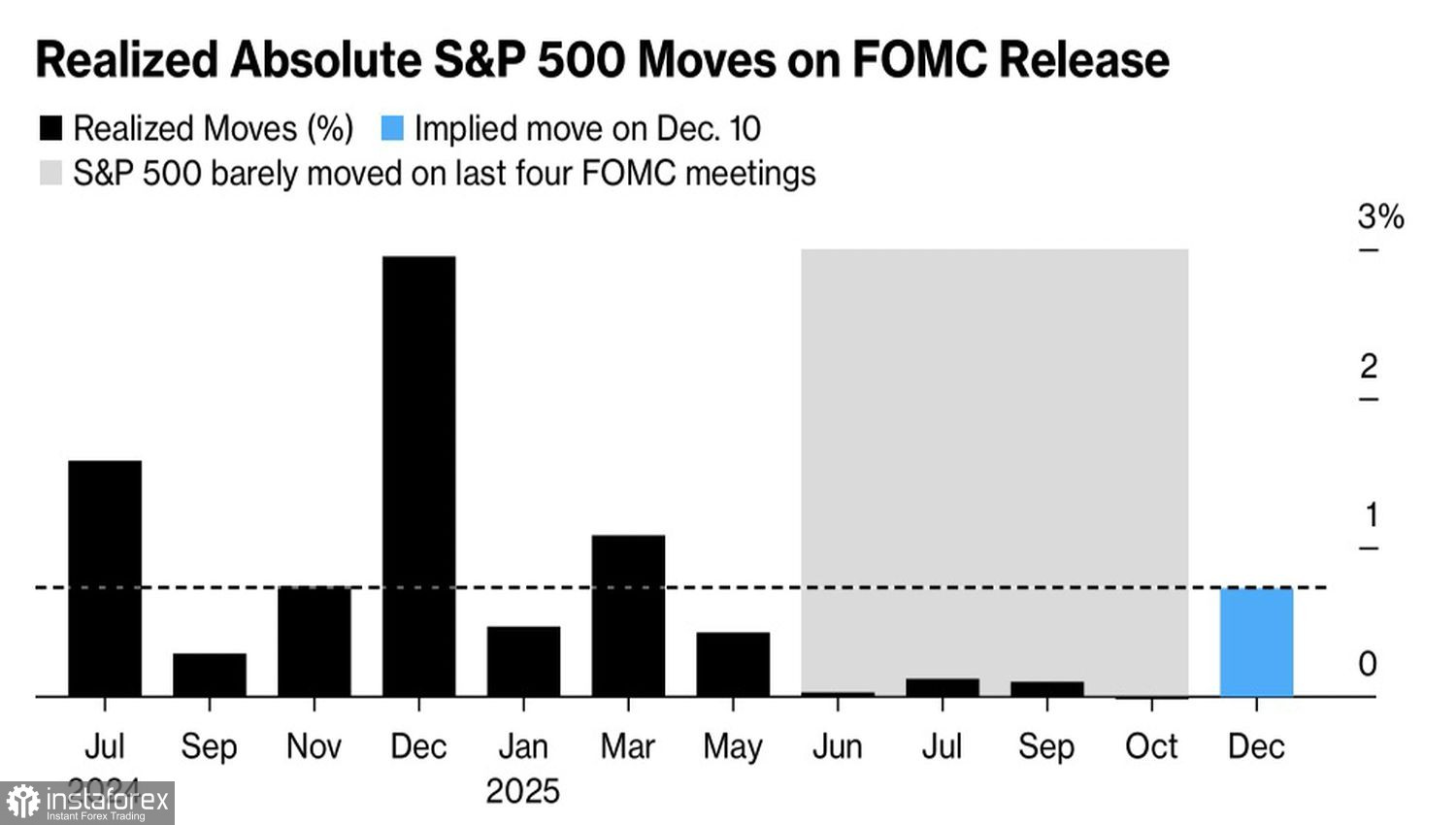
In reality, markets are driven by expectations. Therefore, the broad stock index often reacts not to a rate cut itself but to rumors about its future direction. For instance, the belief in Donald Trump appointing Kevin Hassett as the new chair of the Fed provides significant support to the S&P 500. Derivatives predict an interest rate cut of 100 basis points by the end of 2026.
Thus, even any weakness in the US economy does not guarantee a substantial pullback in the broad stock index. The theme of artificial intelligence will continue to be at the forefront of investors' attention.
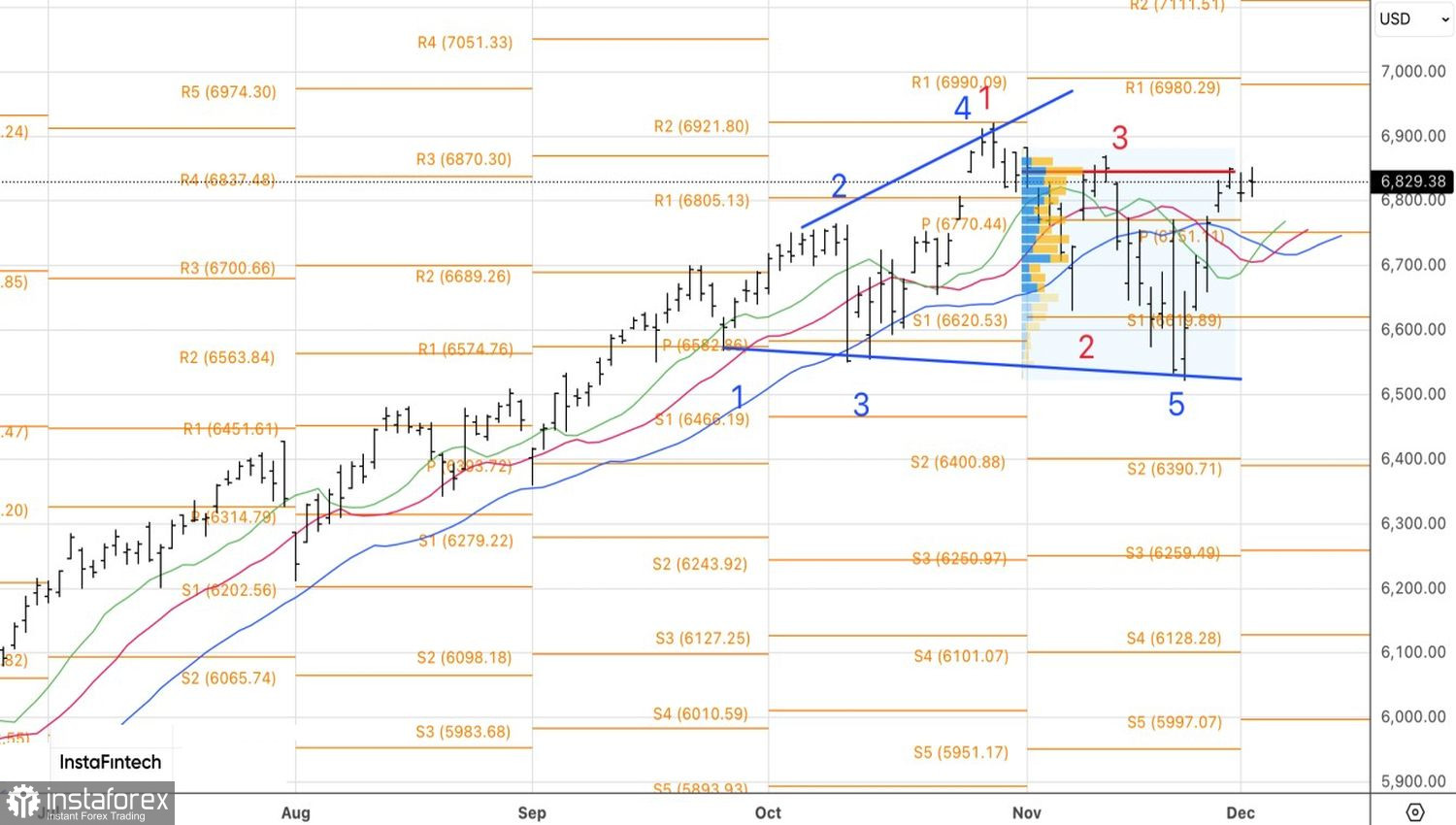
Technically, on the daily chart of the S&P 500, two consecutive doji candlesticks have emerged, indicating uncertainty. A successful retest of fair value at 6,845 would allow for the buildup of previously established long positions. A failure by bulls would heighten consolidation risks.


