


















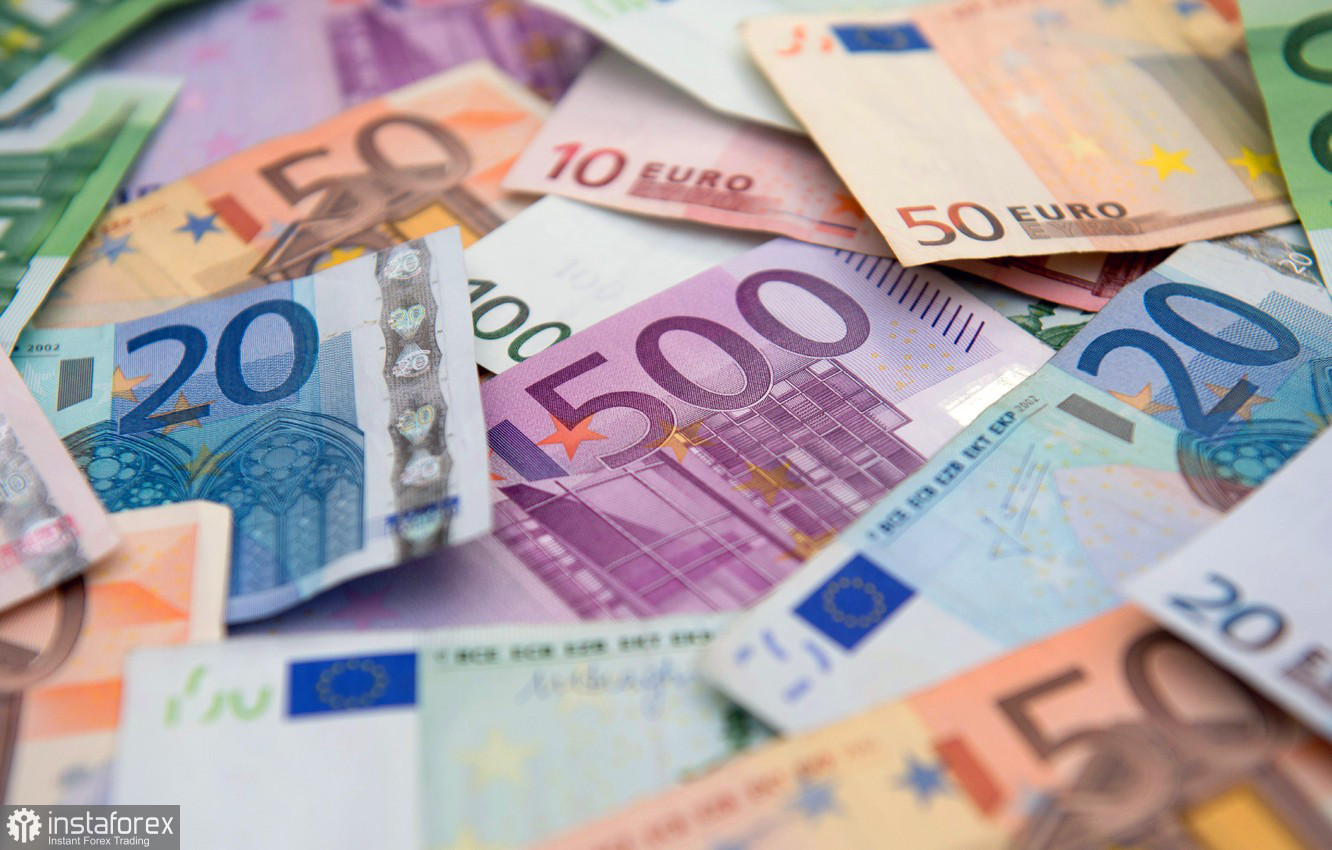
The new year had barely begun when Donald Trump declared war on Venezuela, and the American military delivered a crushing blow on Caracas and other cities. I am not sure the dollar will fall on Monday, but the likelihood of such a scenario is very high. As a consequence, other currencies will appreciate. In particular, the euro.
The problem of a strong/weak exchange rate is not new. Trump has good reason to want to weaken the dollar, because this can increase U.S. export volumes. It's simple — the weaker the U.S. dollar, the cheaper it is for other countries to buy American goods and raw materials. Therefore, virtually all export?oriented countries are interested in weakening their own currency.
There are various ways to weaken a currency. Imagine the central bank, like a madman, starts printing banknotes; more enter circulation, inflation rises, and as a result, the currency depreciates. This method of influencing the currency is called a "currency intervention," and it is tacitly prohibited, since other central banks could carry out retaliatory currency interventions, which would nullify all central banks' efforts. Not all currencies can depreciate simultaneously.
The only apparent way out of this situation is further monetary easing. A loose or "dovish" policy makes investments in EU bank deposits and securities unprofitable compared with similar instruments elsewhere. As a result, demand for the euro falls while demand for other currencies rises. Capital begins to flow from countries with low rates to countries with tighter monetary policy. But will the European Central Bank take such a step?
If rates are cut further, inflation may begin to accelerate. And the ECB spent several years bringing it back to the 2% target. The dilemma is no easy one, but a strong euro will inevitably strike the European economy. Germany's economy — the locomotive of the Eurozone — has long been creaking at the seams. At the same time, Trump's policies may continue to make investors reluctant to deal with the U.S. dollar. It seems that in 2026, alongside military conflicts and trade wars, a currency confrontation may also emerge.
Wave picture for EUR/USD:
Based on the analysis of EUR/USD, I conclude that the instrument continues to build an upward section of the trend. Trump's policies and the Fed's monetary policy remain significant factors in the long-term decline of the US currency. Targets for the current trend section may extend up to the 25-figure level. The current upward wave set may not be complete, but three waves have been built. If it develops further, one should expect growth with targets around 1.1825 and 1.1926, which correspond to 200.0% and 261.8% Fibonacci. But in the near term, a corrective wave or a set of waves may be forming.
Wave picture for GBP/USD:
The wave picture of GBP/USD has changed. The downward corrective structure a-b-c-d-e in C of 4 appears complete, as does the entire wave 4. If this is indeed the case, I expect the main trend section to resume its construction with initial targets around the 38 and 40 figures.
In the short term, I expected the formation of wave 3 or c, with targets around 1.3280 and 1.3360, which correspond to the 76.4% and 61.8% Fibonacci levels. These targets have been reached. Wave 3 or C has presumably completed its construction, so in the near term, a downward wave or a set of waves may be observed.
Main principles of my analysis:
- Wave structures should be simple and understandable. Complex structures are difficult to trade and often change.
- If there is no confidence in what is happening in the market, it is better not to enter it.
- There is never and can never be 100% confidence in the direction of movement. Do not forget protective Stop Loss orders.
- Wave analysis can be combined with other types of analysis and trading strategies.


