


















Investors fed the tech sector for years with faith in unlimited returns from AI investments. Yesterday, the bill arrived — and it was far larger than the market expected.
Magnificent Seven dynamics
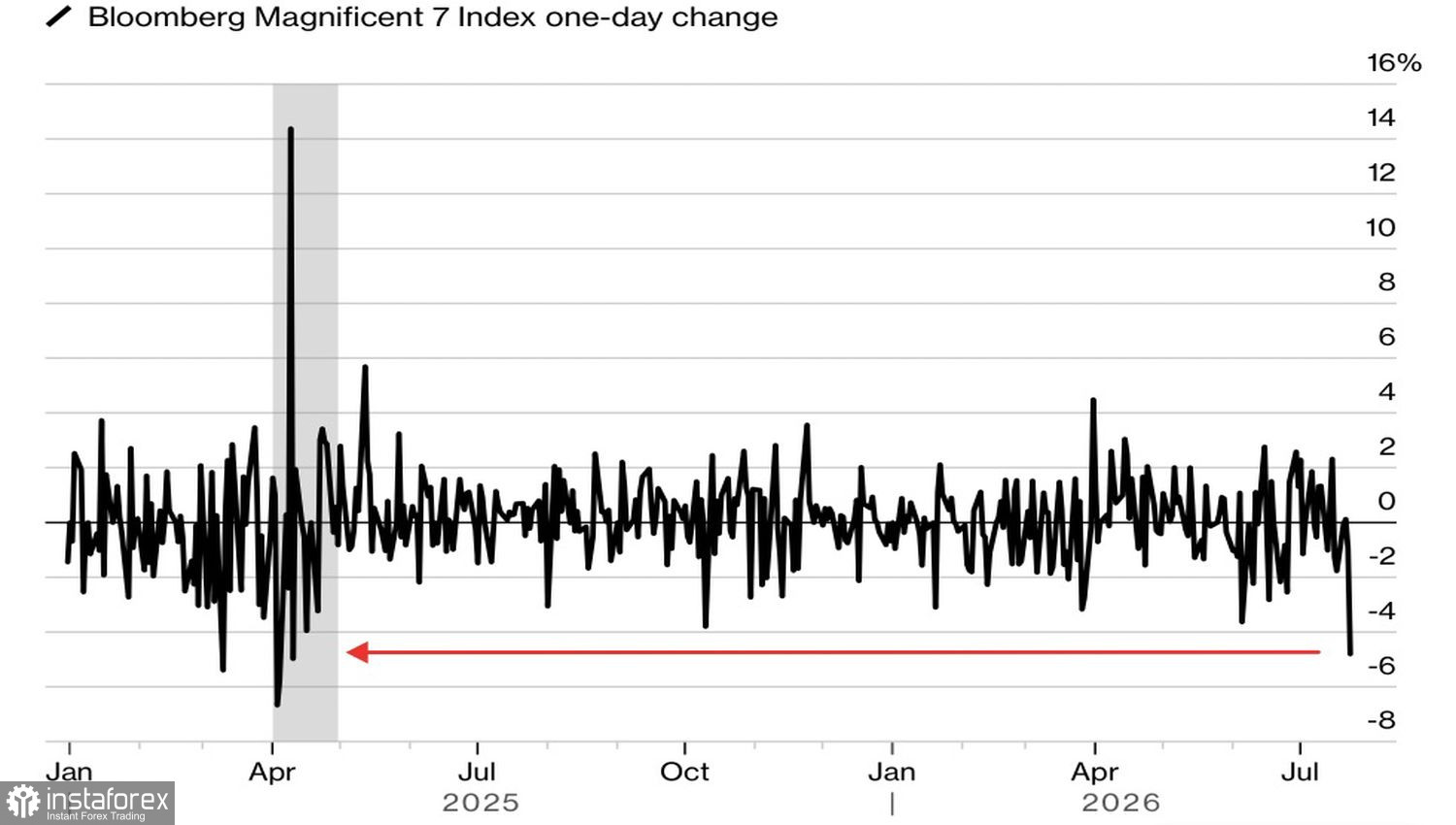
The S&P 500 recorded its worst day in a month. The Magnificent Seven wiped out $797bn of market value in a single session, marking the biggest one-day loss since the tariff panic of April 2025. The Nasdaq 100 fell by about 2%, and the Dow plunged by more than 400 points.
The culprits are familiar. Alphabet and Tesla reported revenue growth, but investors focused on costs rather than revenues. Alphabet raised its full-year capex guide to $205bn, and its shares plunged about 7%. Free cash flow turned negative. Tesla suffered the same fate: the stock dropped by 14% after a negative FCF in Q2. "Negative free cash flow" became the phrase of the day for both reporting giants.
Alphabet free cash flow dynamics
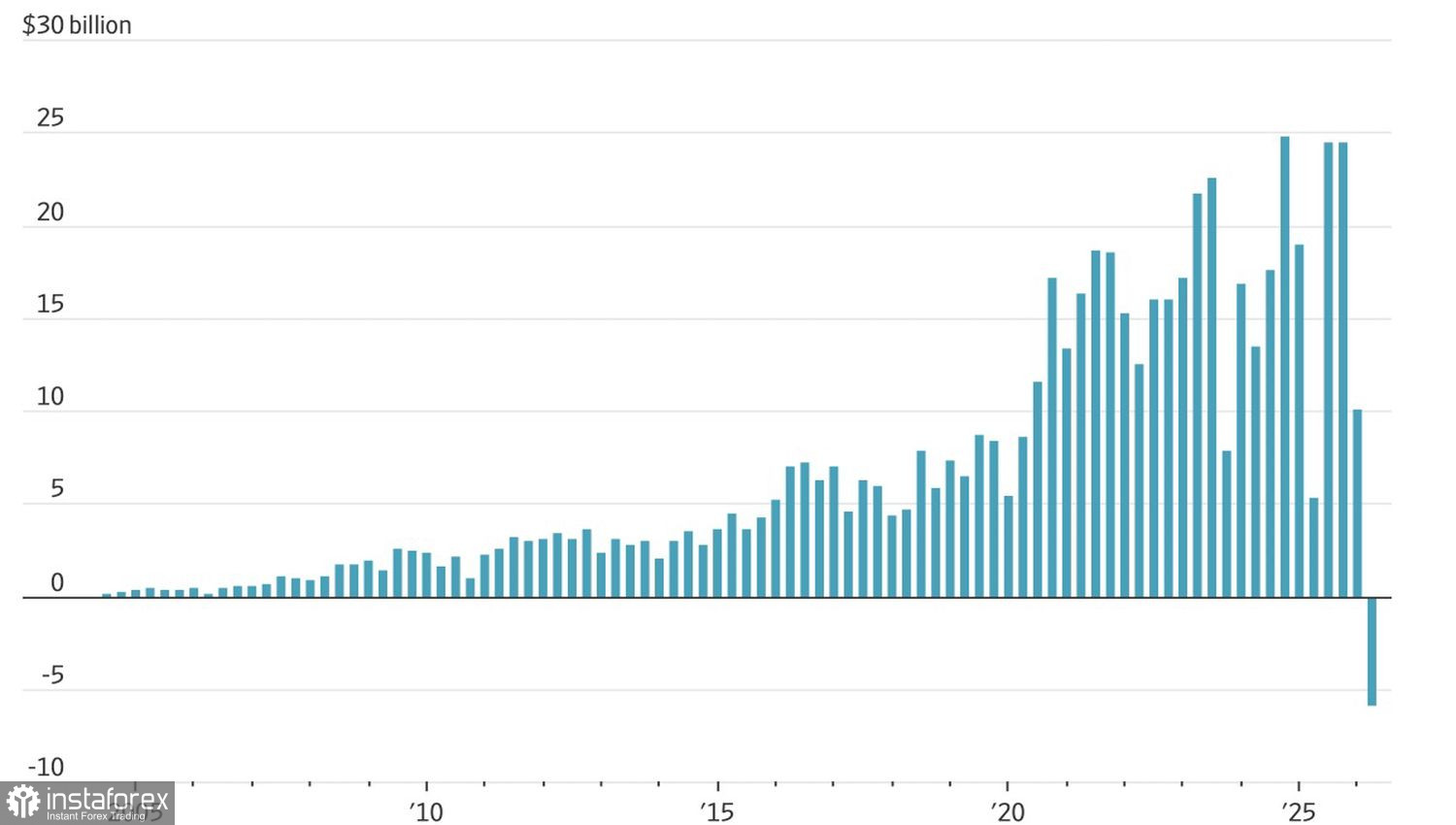
According to FactSet, Meta and Amazon face a similar risk when they report next week. Amazon has already posted negative cash flow in Q1. Four giants — Alphabet, Meta, Microsoft, and Amazon — have announced roughly $725bn of AI-related spending this year. Traders are increasingly asking whether these outlays will generate real growth or are simply inflating costs.
Geopolitics poured fuel on the fire. US President Donald Trump told Axios he is considering a "massive strike" on Iran-backed Houthis after attacks on Saudi tankers in the Red Sea. Brent rose above $100/bbl, and bond yields jumped. Money markets lifted the odds of a Fed hike this week from about 10% to roughly 35% and are now pricing in a full tightening by September.
Rising rates are especially painful for tech companies: valuations are built on profits far in the future, and the present value of those profits declines as yields rise. Higher rates also make financing massive AI infrastructure investments more expensive. The equal-weighted S&P 500 confirms market weakness: about 300 stocks fell, while only 200 closed higher.
More hyperscalers report next week. It is too early to say they will face the same fate as chipmakers, but current events amplify the risk of a "sell-the-news" reaction. Will tech giants repeat the chipmakers' outcome?
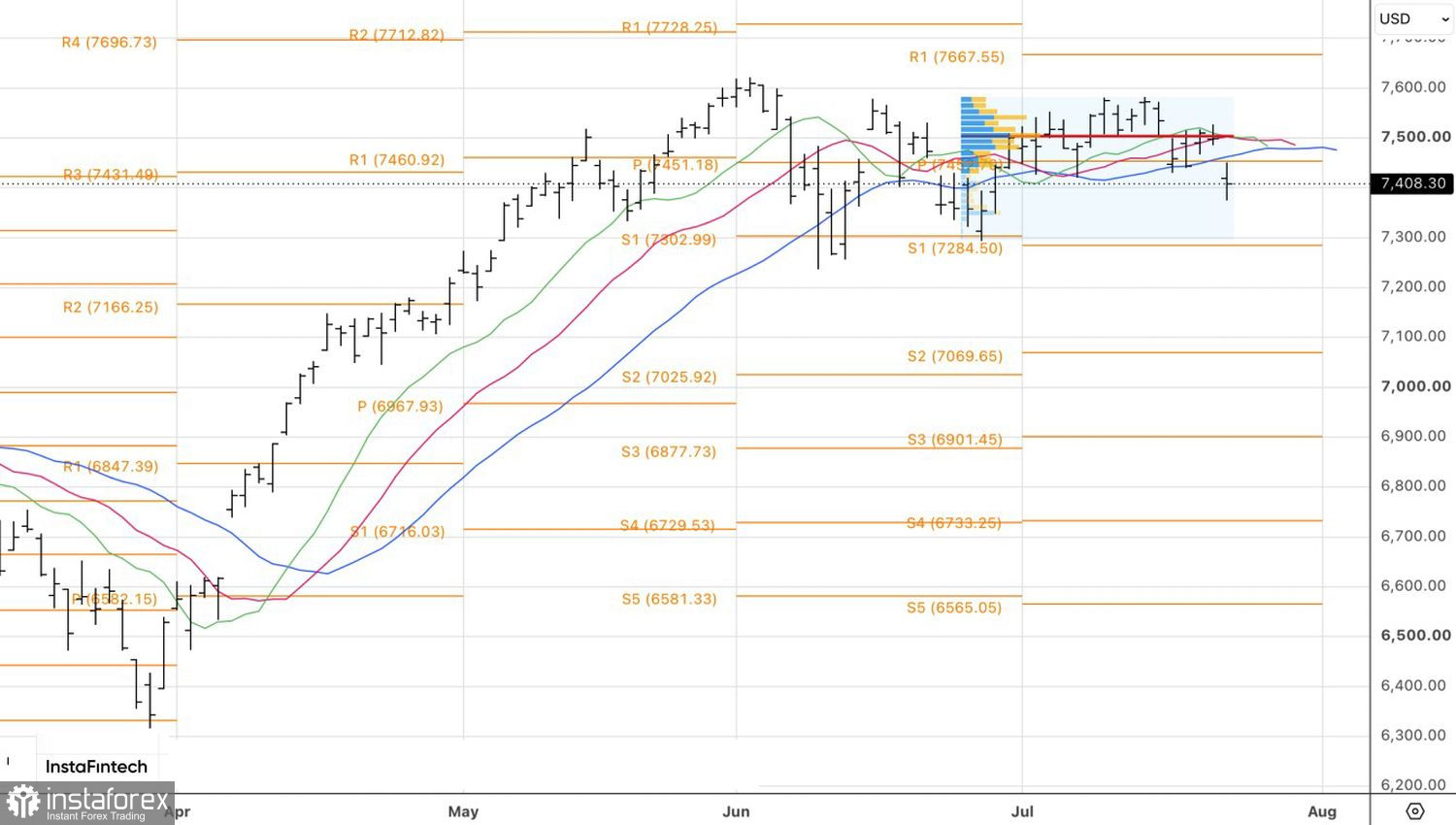
Technically, the daily chart shows that the S&P 500 opened with a gap down that was not closed, which indicates a sign of bear strength. If bears can keep the price below the lower bound of the prior consolidation range (7,430–7,580), then short positions established on its breakout can be scaled up.


