


Gold and inflation-protected Treasury yields used to move like two ends of a seesaw: when one swung, the other followed. But that link unraveled like an old sweater after Russia's 2022 invasion of Ukraine, as sanctions risk eroded bonds' role as a savings hedge.
Gold and bond yield dynamics
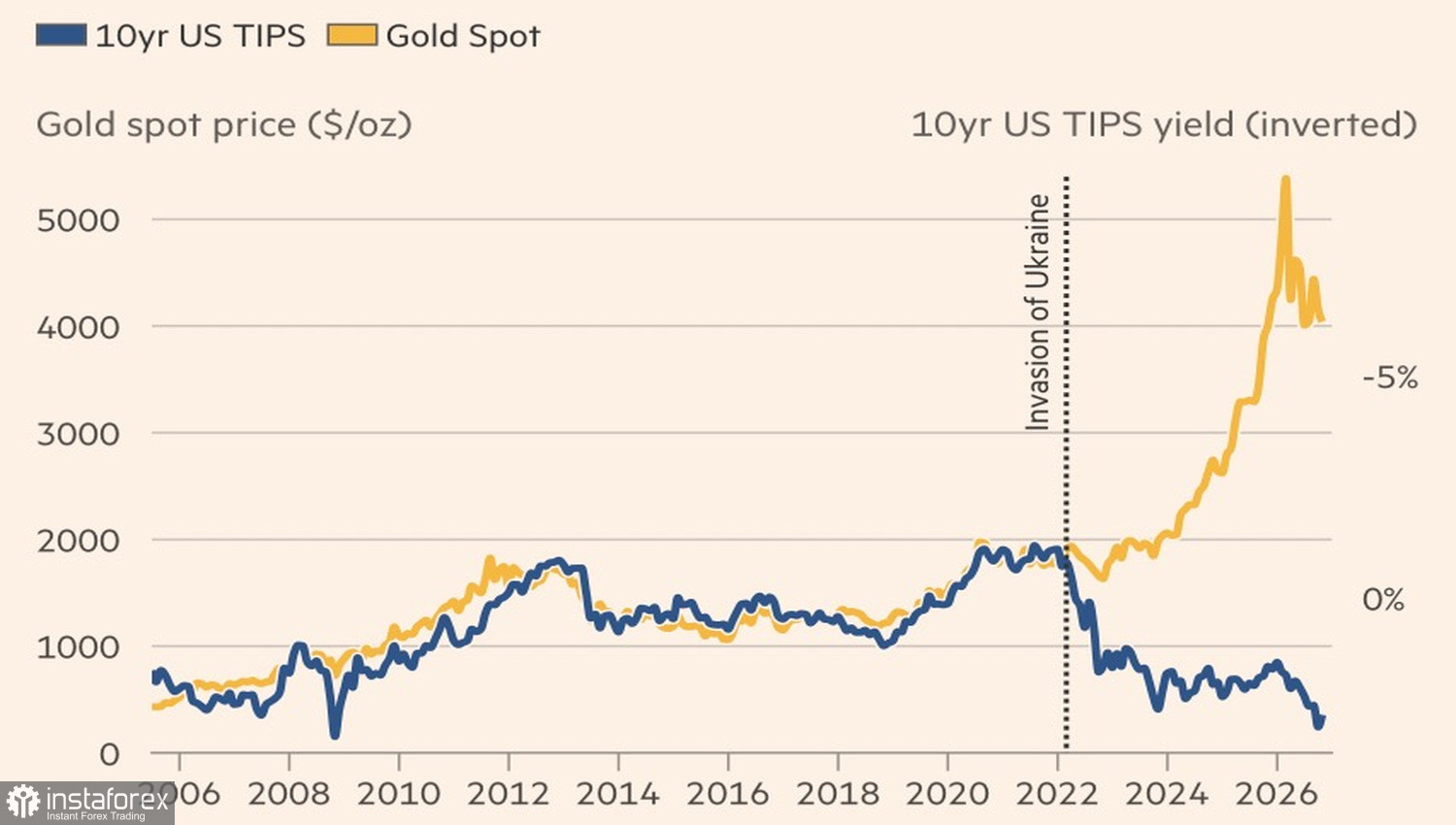
The metal fell below $4,000 per ounce to a mid-July low, down nearly 10% since September. The sell-off was triggered by capital outflows from the US stock market, with investors selling bullion to cover losses on equities.
Pressure on the safe-haven asset has been intensified by a strong dollar, rising bond yields and hot inflation data, which have reinforced expectations of Fed rate hikes. Outflows from gold-backed funds are another negative factor: ETFs lost almost 17 tonnes of reserves over three trading days.
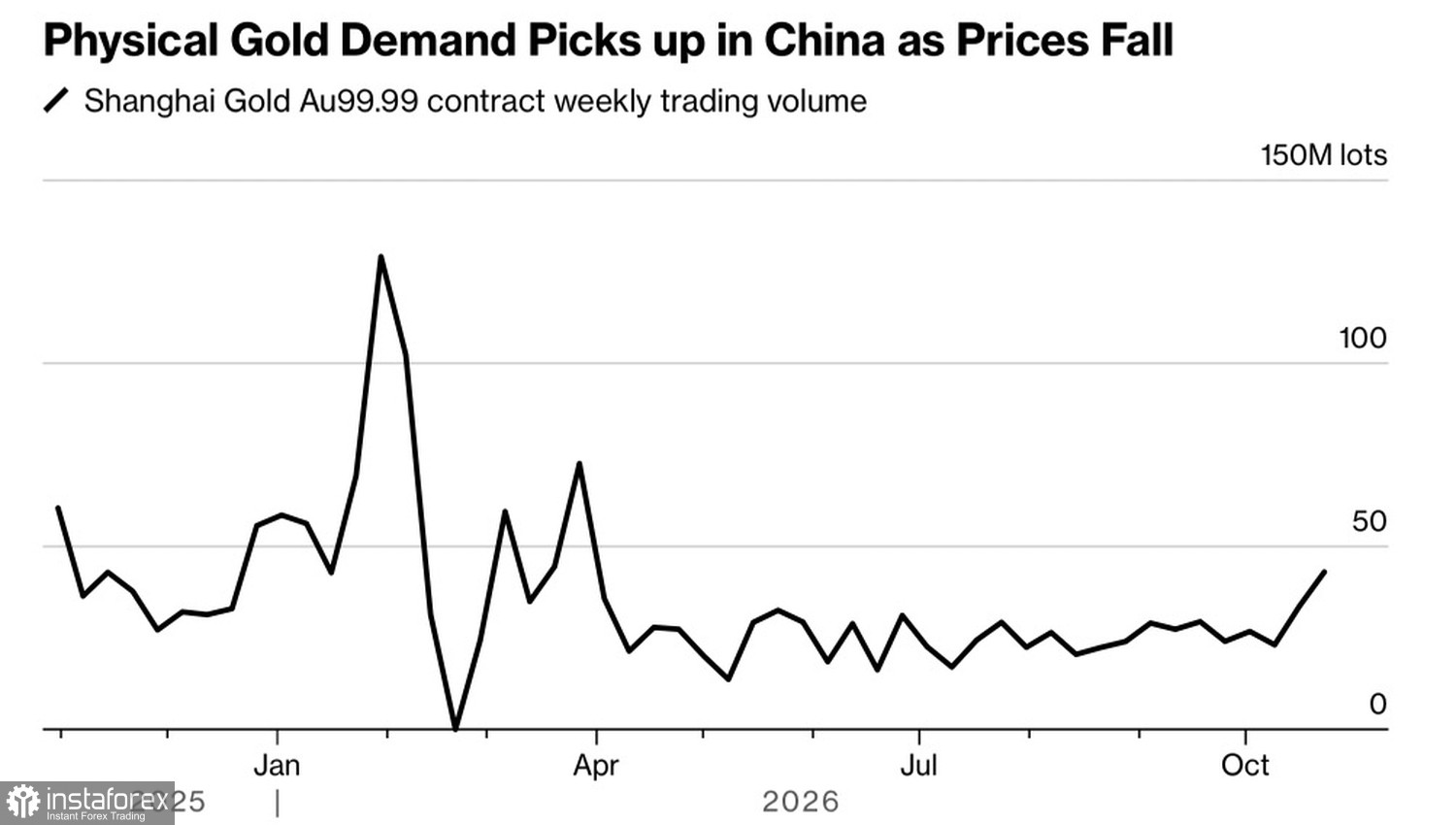
Support for gold comes from structural central bank demand and increased appetite among Chinese households, for whom bullion has become a magnet amid cheaper domestic stocks. Open interest in one of the most popular contracts on the Shanghai Gold Exchange jumped to 430 tonnes, a high since April, and tight delivery conditions point to physical demand rather than leveraged positions.
Trading volumes in gold
In a Reuters survey of 30 analysts and traders, the 2026 forecast was cut for a second consecutive quarter to $4,495/oz from $4,509 three months earlier, although the 2027 estimate was raised to $4,650 from $4,610.
JP Morgan expects Fed funds hikes in December and again in Q1 2027, which would push 10-year yields to a peak of 5.25–5.5% from below 5% today. The bank believes gold will find a bottom once yields peak and could then rise substantially thanks to its reputation as a reliable hedge.
Amundi expects a recovery to $4,500/oz but not to the previous $5,000 target by year-end. The market, they say, has already priced the worst-case scenario — inflation without recession and a monetary tightening cycle from the Fed — and light trader positioning after the retreat creates the groundwork for a rebound.
The main paradox for the precious metal is that, with improving US macro data and expensive oil, the Fed should be tightening policy, but it prefers to hold the funds rate steady. That raises the odds of a jumbo 50bp hike and keeps gold under pressure.
If October's rate verdict brings three dissenters back into the Fed's cadre, will that pull gold back below $4,000 along with the stock market?
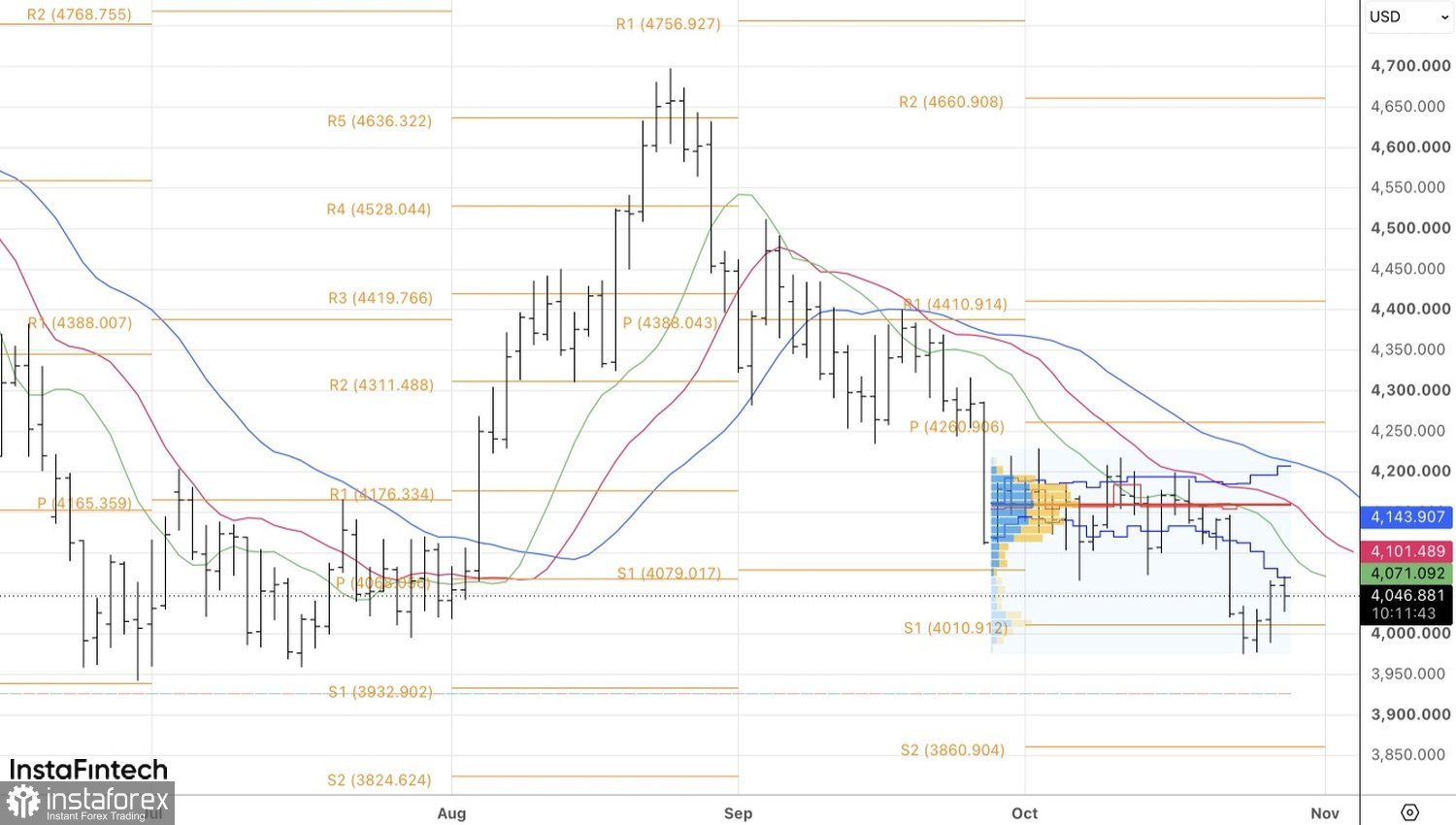
Technically, the daily chart shows a bounce off the lower band of the fair-value range of $4,070–4,210/oz. If the price fails to break higher, the odds of resuming the downtrend will rise. Under such conditions, it makes sense to focus on selling opportunities.


