


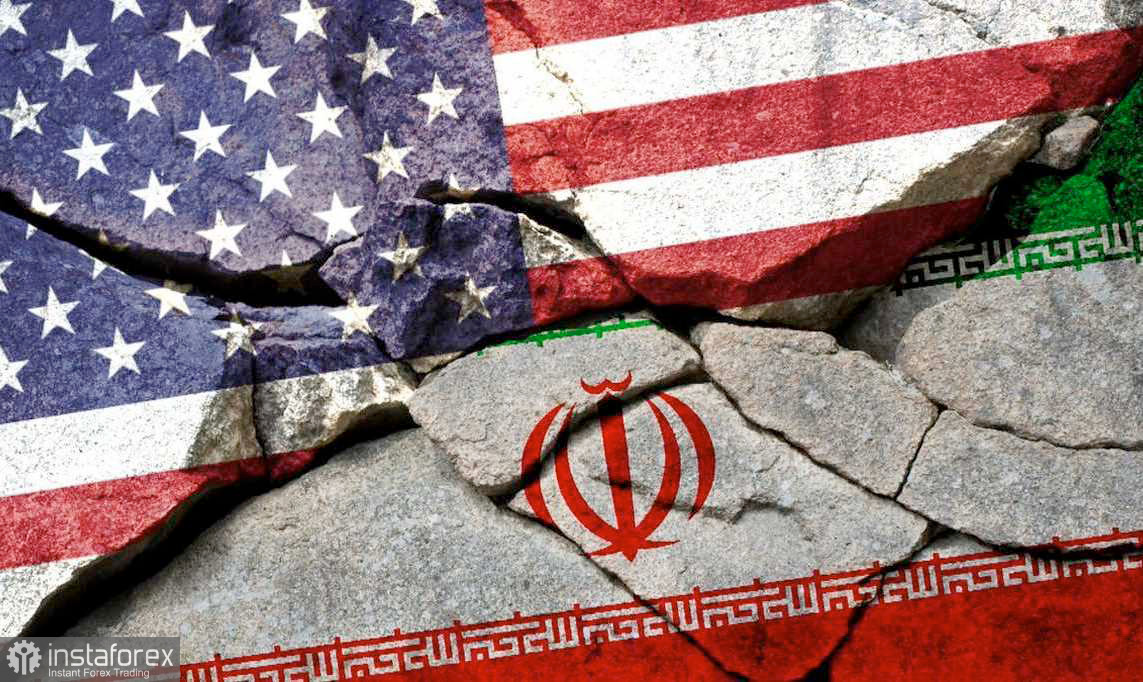
Trump repeatedly claimed that Iran's key nuclear and military facilities were either significantly damaged or completely destroyed. The U.S. president repeatedly declared a total victory over Iran, which the next day was denied by Iran itself, by military experts, and even by some officials in the White House or the Pentagon. In short, America may indeed have damaged some facilities, but Iran has operated in a wartime mode for about 50 years. The country lives under a state of near-constant conflict. Therefore, military or nuclear facilities, some of which are located underground or deep inside mountains, are repaired very quickly and as a priority. Accordingly, after a few months' pause in military actions, I have no doubt that most of the damaged facilities will already be restored. Donald Trump probably understands this as well, yet he loudly proclaims very different things.
U.S. intelligence also reports that Iran may possess between 1,500 and 2,500 missiles—enough to deliver a devastating strike on U.S. allies if the war resumes. In fact, counting the exact number of missiles Iran has is difficult, but it is safe to say that many remain. Military experts also believe Iran is continuously increasing production of missiles and drones and is rebuilding damaged facilities. Perhaps more slowly than before the war, but it is rebuilding nonetheless.
It is also reported that the fact Iran has sufficient military capability to resume the war is well known to U.S. officials. Perhaps that is why we have not yet seen new strikes on Iran, since they would inevitably provoke retaliatory strikes. What would be the point of them if the U.S. military failed to achieve any of its objectives in nine months of conflict in the Middle East, and Donald Trump and the Republican Party have already suffered a crushing defeat in the congressional elections? In early January Congress will have a full Democratic majority, and Democrats will seek to block Trump's ability to continue military actions in the Middle East.
In other words, I consider a resumption of war with Iran completely pointless, because previously Trump at least wielded uncontested power and could make unilateral decisions. He still has broad powers, but Democrats now also have the means to block his decisions.
Other articles to read:
Analysis EUR/USD. November 16: Warsh to focus on inflation?
Analysis GBP/USD. November 16. Only inflation can save GBP
Wave analysis for EUR/USD:
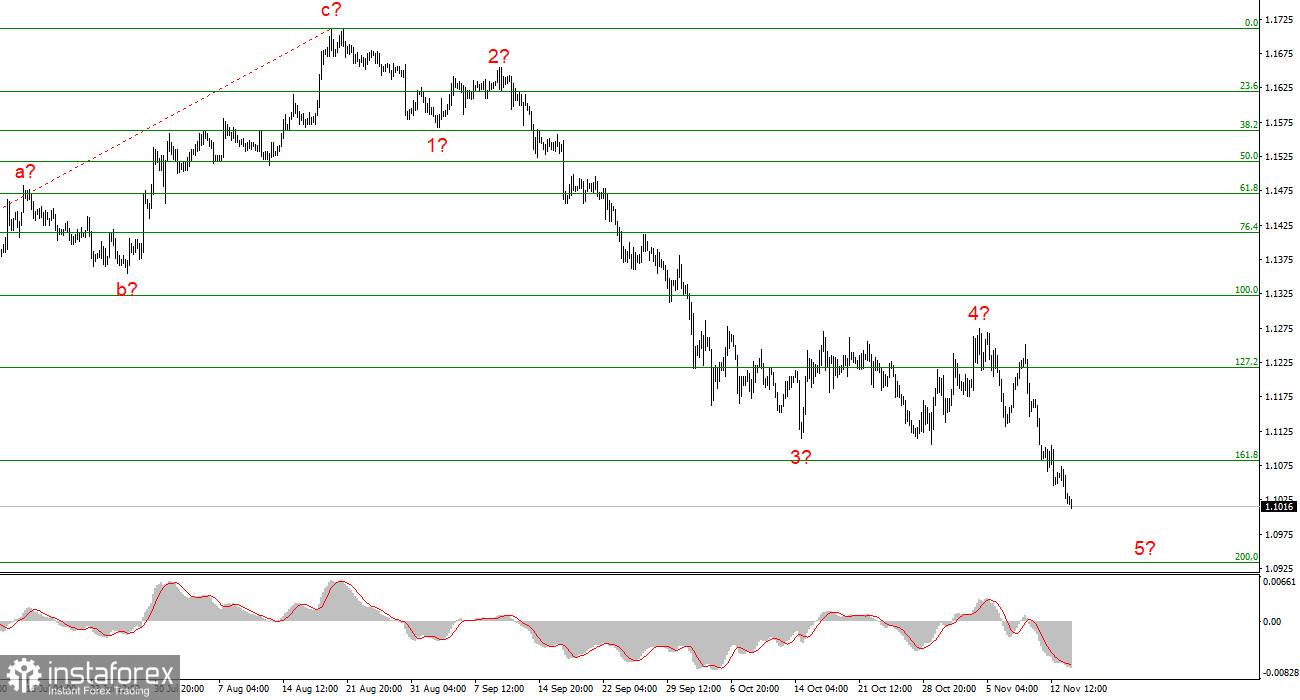
Based on my EUR/USD analysis, I conclude the instrument remains within a global corrective A-B-C-D-E trend segment. However, this structure looks fully complete and could be finished at any moment. In my view, now is a good time not only to buy the European currency but also to expect a full bullish trend segment. On the higher timeframe, one should expect a rise of at least 1,700–1,800 pips. In my view, the stronger the instrument falls now, the more it will rise later. However, confirmations of the end of the downward wave sequence are needed. For example, a failed attempt to break 1.0902—which corresponds to 61.8% on Fibonacci on the higher timeframe—would indicate market readiness to buy.
Wave analysis for GBP/USD:
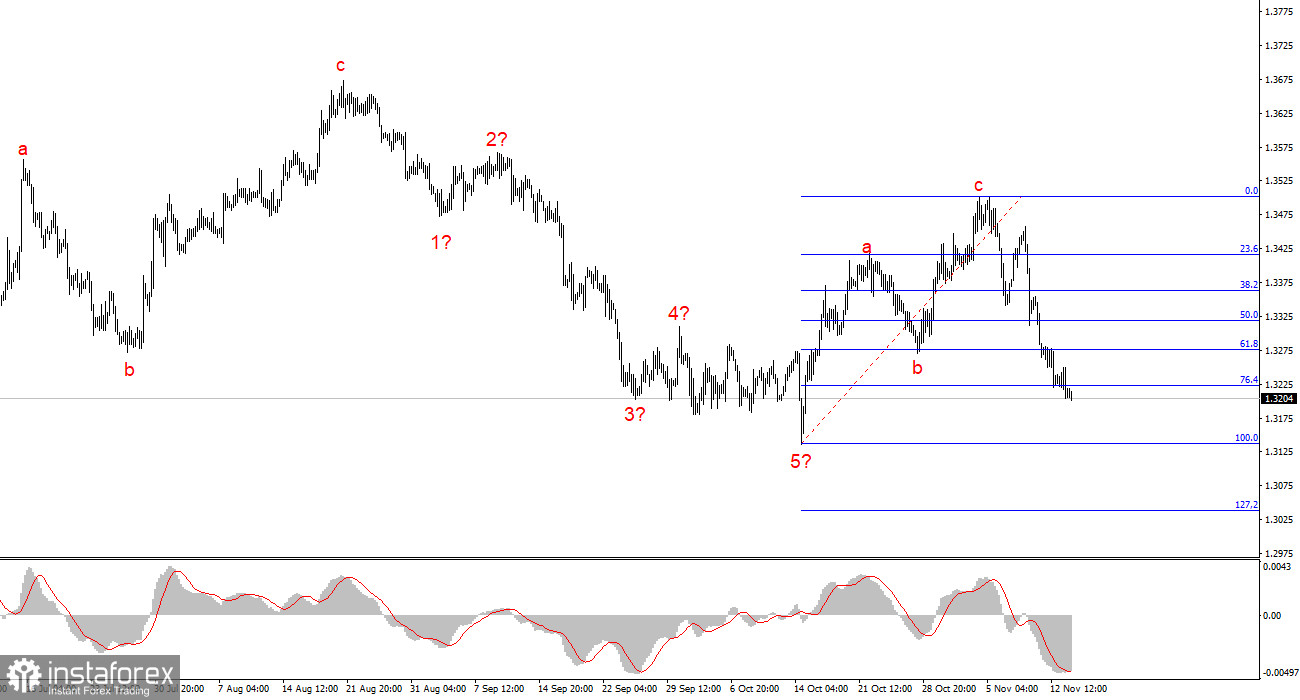
The wave picture for GBP/USD has become completely clear. Now on the higher timeframe we have a corrective A-B-C-D-E structure that, by logic, should already be complete. However, the lower timeframe indicates the downward wave sequence is not finished. Consequently, the pound's decline may continue with targets near 1.3138 and 1.3039, which correspond to 100.0% and 127.2% on Fibonacci. The deeper the pound falls, the more I look toward long-term buy opportunities.
Key principles of my analysis:
1) Wave structures should be simple and understandable. Complex structures are hard to trade and often change.
2) If you are not confident about what is happening in the market, it is better not to enter.
3) There is no such thing as 100% certainty in direction; do not forget protective stop-loss orders.
4) Wave analysis can be combined with other types of analysis and trading strategies.


