


















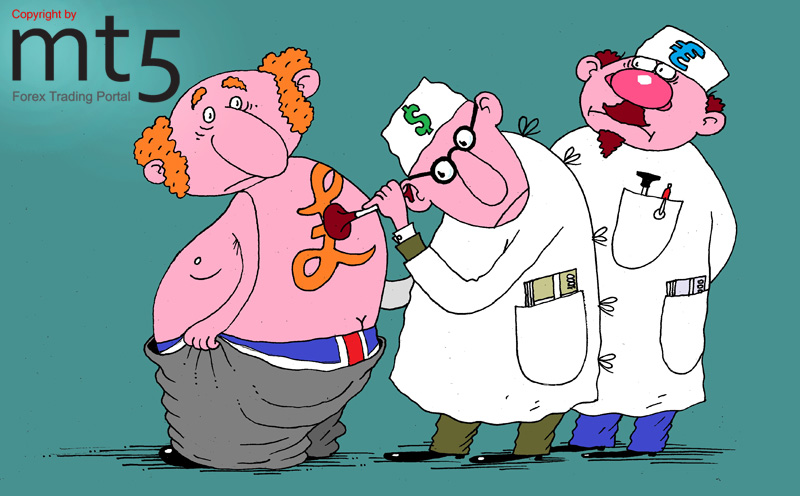
The United Kingdom’s pound sterling can post a significant decline against major currencies, the Financial Times said, citing anonymous sources among traders and hedge fund managers. According to them, the pound seems clearly at risk of following the yen which has depreciated by about 12% against the U.S. dollar since last November.
The yen started falling on the Japanese government’s efforts to fight deflation. Cheaper yen could help local manufacturers oriented to exports receive additional profit. It is crucial for Japanese companies as by the results of 2011-2012 many of them got record losses.
In Great Britain the pound sterling is under pressure of weak exports, low level of industrial production and government spending cuts dragging on for a long time. Hedge funds pay attention to another fact as well: Sir Mervyn King, the governor of the Bank of England, is due to step down from his position in June 2013. He will be replaced by the current head of the Bank of Canada Mark Carney, who is said to be willing to put up with the relatively high inflation due to the support of the country’s economic growth.
Expectations for a significant change in the sterling exchange rate have already influenced its global market price. To compare: in late January the rate of exchange between the pound and the U.S. dollar was 1.58, while as of mid-February it constituted 1.55.
Now traders are paying special attention to changes in the currencies exchange rates on the markets as various assistant programs to local economies from governments give scope for currency speculations. Thus, the U.S. media reported in early February that George Soros managed to gain nearly $1 billion betting against the yen.


