FX.co ★ Economy of emotions — end of dream monopoly


Economy of emotions — end of dream monopoly
AI in music — from tool to author and beyond
Often, the change is surprising. Creating music with AI (Suno, Udio, and others) is no longer a novelty. Music videos for songs written entirely by algorithms achieve millions of views. Studios and producers are no longer indispensable. The creator only needs to formulate the prompt correctly and pick the best option offered by the machine. It is even easier to ask an AI to “rewrite” a well‑known hit with a different performer and in another language. How about Shatunov’s “Grey Night” performed by Kanye West?
BTS phenomenon — music as economic engine
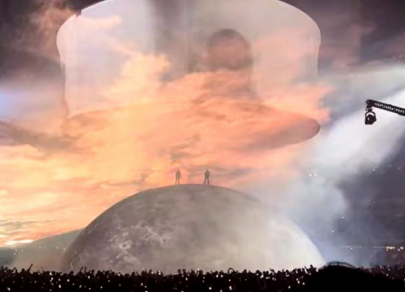
If everything becomes easy on the AI stage, do real artists still matter? Absolutely, but only the very best. The effect of cheap substitutes has limits. When people want real food and real spectacle, they are willing to pay for it. For example, BTS annually contributed more than $5 billion to South Korea’s GDP. The budget of their fans (ARMY) rivals the population of a small country. On March 21, BTS celebrated their return with a free concert in Seoul. Analysts believe the group’s world tour in 85 countries could even surpass Taylor Swift’s Eras Tour.

Taylor Swift and Eras Tour —economy of one person
The Eras Tour became the first in history to gross more than $2 billion. Swift created a precedent for Swiftonomics, where an artist’s arrival in a city stimulates the local economy as powerfully as hosting the Olympic Games. Hotels, restaurants, and transport companies record all-time profits, and US federal banks mention her name in reports. One artist and one show have become an independent economic institution. In a fleeting world, Taylor Swift offered long‑term emotional attachment within a vast industry of experiences.

Hollywood’s crisis —decline of “dream factory”
While pop stars break records, the symbol of the American dream — Hollywood — is undergoing a deep transformation. The Wall Street Journal reports a sharp drop in filming in Los Angeles. This is not a temporary pause but a structural crisis. Hollywood is no longer the exclusive place to create content. The industry that held a monopoly on spectacle for more than a century now must justify itself to investors and search for new meanings in a world where TikTok is watched more often than blockbusters.

Human factor —quiet tragedy behind scenes
A 30-percent drop in employment in Hollywood is not just statistics. It represents the collapse of an entire layer of professions. Carpenters, makeup artists, costumiers, and lighting technicians are increasingly redundant. Los Angeles lost 40,000 entertainment jobs in just three years. Human Hollywood is disappearing, along with the unique passing down of craft and even the very concept of the actor. Creative paradise is turning into a zone of brutal cost-cutting, where costly productions are replaced by AI projects.

Virtual influencers — eternal youth in digital form
AI makes it possible to create stars that never age, never fall ill, and do not trigger scandals without their owners’ consent. Virtual avatars already gather millions of followers and sign endorsement deals with luxury brands. This is a new take on personality in the media. We understand that sympathy and trust no longer require a living person, as a convincing image and an engaging story are enough. That creates competition for real artists, forcing them either to become even more “human” or to retreat into digital mystique.
Visual explosion — neural networks as directors
Neural networks direct music videos that attract viewers with a surreal aesthetic that is impossible or prohibitively expensive to achieve. AI can generate worlds outside the laws of physics and synchronize any visual imagery to music with mathematical precision. Cinema is shifting from “filming reality” to “generating dreams.” The popularity of such videos shows that audiences are ready to move away from Hollywood standards in search of new visual experiences.

New geography of fame — world without borders
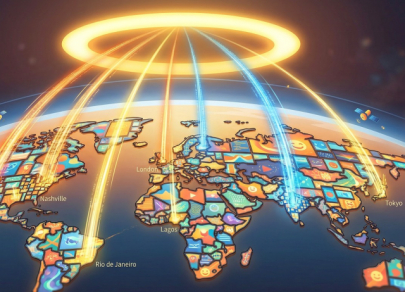
The main outcome of these changes is the final decentralization of success. To become a global star or mount a profitable tour, it is no longer necessary to move to Los Angeles or sign with a major label. Korean artists, American country singers, and AI enthusiasts from anywhere in the world now meet at a single point—the screen of your smartphone. The old world of “workshops” and “factories” was only a stage. The future belongs to flexible systems where technology and authenticity matter more than a historical address in Hollywood.
AI beyond creativity — predictive success
AI’s role in entertainment goes much further. Neural networks are used to analyze future hits: they predict which script will resonate with audiences, which melody will go viral on social networks, and how to allocate an advertising budget efficiently. It is a “mathematics of success” that removes some romance from the industry but makes it hyper‑efficient. We are discovering business as a data system in which a producer’s intuition is replaced by algorithmic precision. AI becomes an invisible adviser that knows our desires before we even realize them.