


















On the hourly chart, the GBP/USD pair spent some time in hesitation on Monday due to a complex information background, but eventually reversed in favor of the pound, holding above the resistance zone of 1.3526–1.3539, from which three previous rebounds had occurred. This suggests that the pound's upward movement may continue toward the 127.2% Fibonacci level at 1.3595. Holding below the 1.3526–1.3539 level would work in favor of the dollar and could lead to some decline toward 1.3437–1.3470.
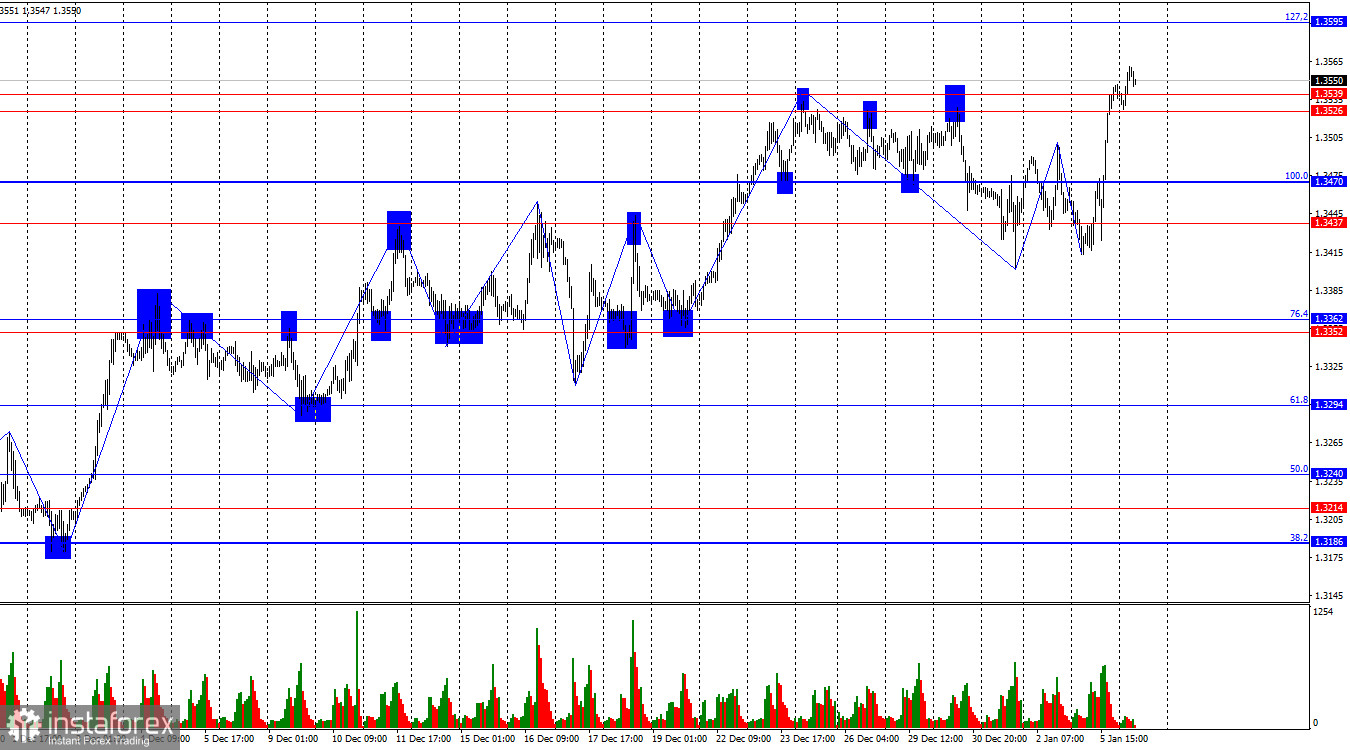
The wave structure remains "bullish." The last completed downward wave did not break the previous low, while the new upward wave broke the previous high. The information background for the pound had been weak in recent weeks, but the US data environment also leaves much to be desired. At the start of the new year, bulls retreated slightly, but the trend remains, and traders are awaiting economic data. A break of the "bullish" trend would occur below 1.3403.
Monday's news flow was sparse but important, and the arrest of Venezuelan President Nicolas Maduro on Saturday had little impact on the dollar or trader sentiment. The only report of the day—the ISM Manufacturing Index—set the market mood. The index fell compared to November, which was enough for traders to start new dollar sales. Thus, the start of the new week, month, and year has clearly begun poorly for the US currency. It could get worse. Traders may have a brief pause today, but on Wednesday, ADP, ISM, and JOLTS reports will be released. The ISM Services Index may fall in December, ADP job numbers are unlikely to be strong, and JOLTS is not the most important labor market report. In my view, bullish traders have not lost their initiative and will continue pushing.
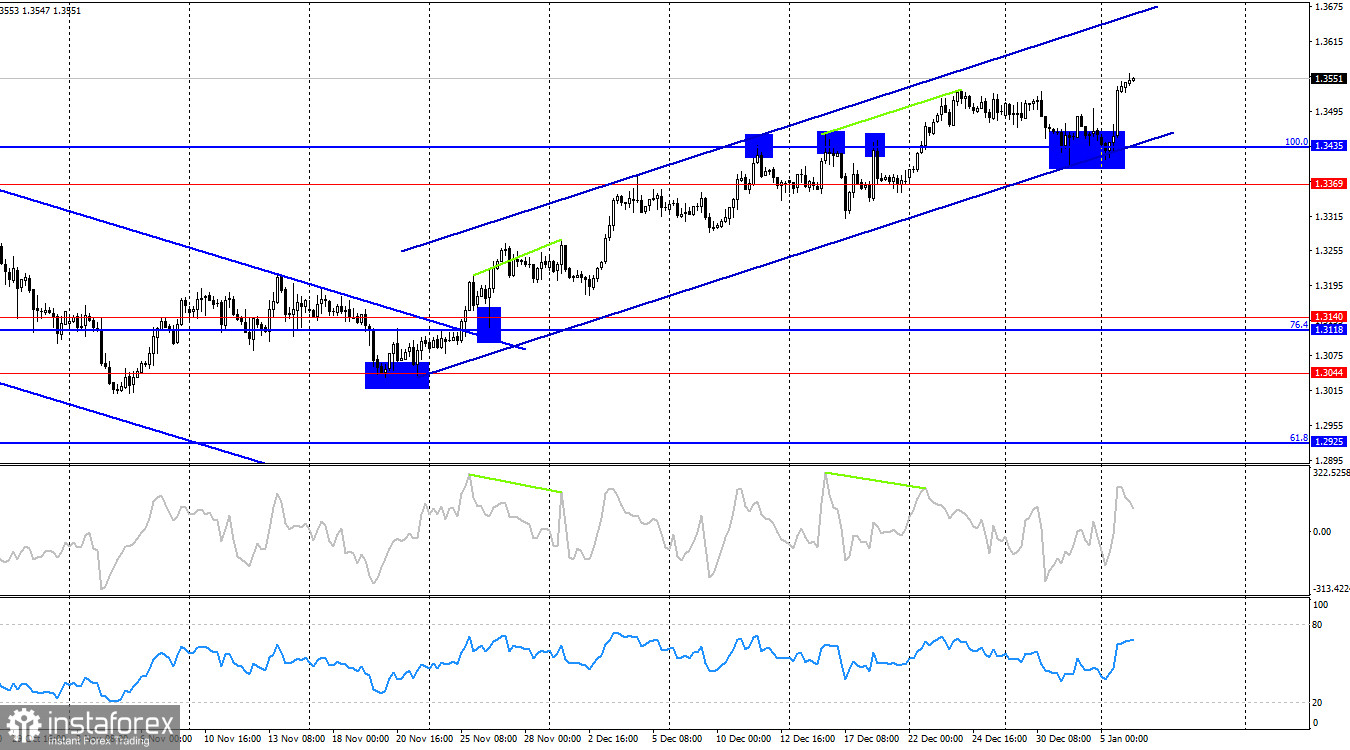
On the 4-hour chart, the pair returned to the support level of 1.3369–1.3435. A rebound from this zone favored the pound and a resumption of growth toward the next 127.2% Fibonacci level at 1.3795. Holding below the 1.3369–1.3435 zone would allow traders to expect a reversal in favor of the US dollar, with a decline toward the support level of 1.3118–1.3140. The upward trend channel indicates the "bullish" trend remains intact. No emerging divergences are observed today.
Commitments of Traders (COT) Report:
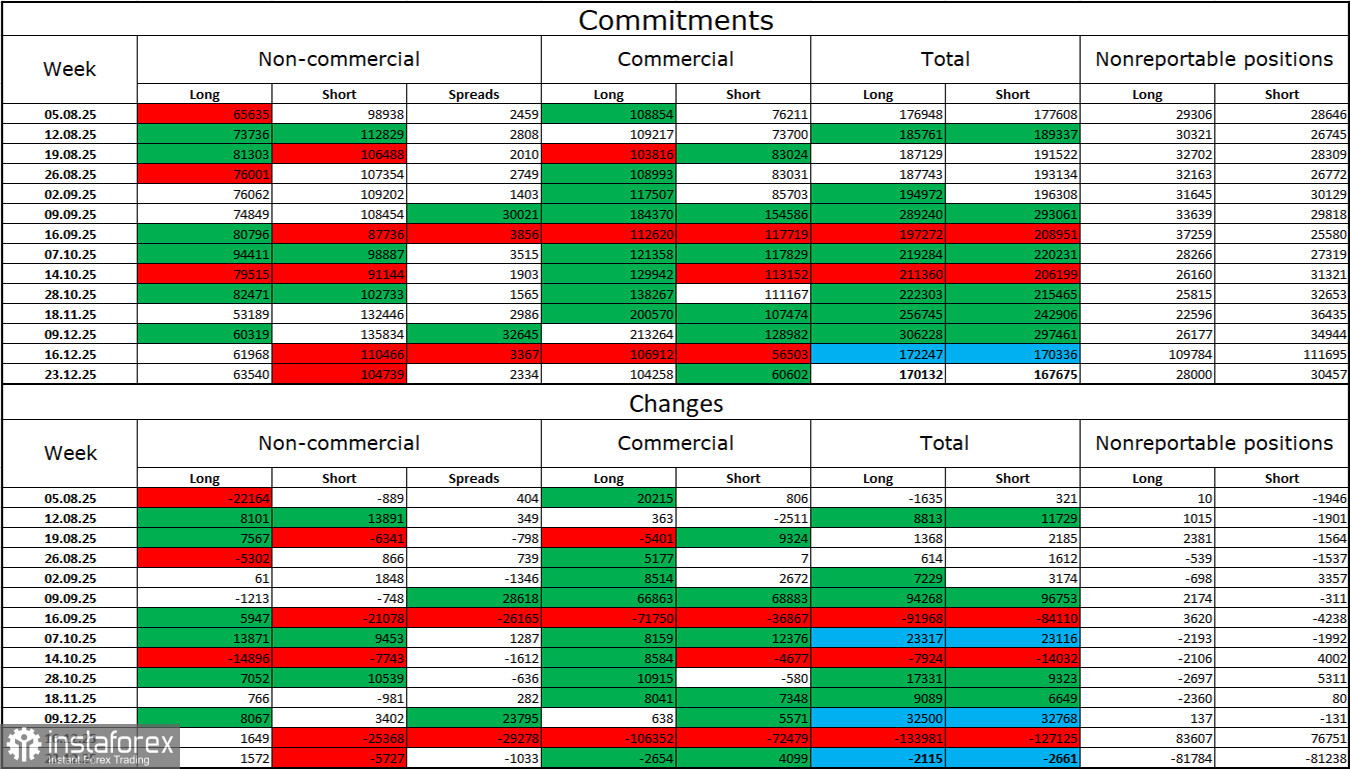
The sentiment of the "Non-commercial" trader category became more bullish over the last reporting week. The number of long positions held by speculators increased by 1,572, while short positions decreased by 5,727. The current long-to-short contract ratio is approximately 63,000 vs. 105,000. Bears have dominated in recent months, but the pound appears to have exhausted its downward potential. At the same time, the situation with euro contracts is the opposite. I still do not believe in a "bearish" trend for GBP.
In my view, the pound still looks less "risky" than the dollar. In the short term, the US currency may experience intermittent demand, but not in the long term. Donald Trump's policies have sharply impacted the labor market, and the Fed has been forced to implement monetary easing to curb rising unemployment and stimulate job creation. For 2026, the FOMC does not plan strong monetary easing, but currently, no one can be certain that the Fed's stance will not shift to a more "dovish" position during the year.
US and UK News Calendar:
On January 6, the economic calendar contains no significant entries. The informational background's impact on market sentiment on Tuesday will be minimal or very weak, limited to the final December assessments of business activity indices in the UK and US.
GBP/USD Forecast and Trader Advice:
Selling the pair may be possible today if it closes below the 1.3526–1.3539 zone on the hourly chart, targeting 1.3470. I advised buying if the pair holds above 1.3437–1.3470 with a target of 1.3526–1.3539. That target has been reached and surpassed. Therefore, long positions can remain open today with a target of 1.3595.
Fibonacci levels are plotted from 1.3470–1.3010 on the hourly chart and from 1.3431–1.2104 on the 4-hour chart.


