


















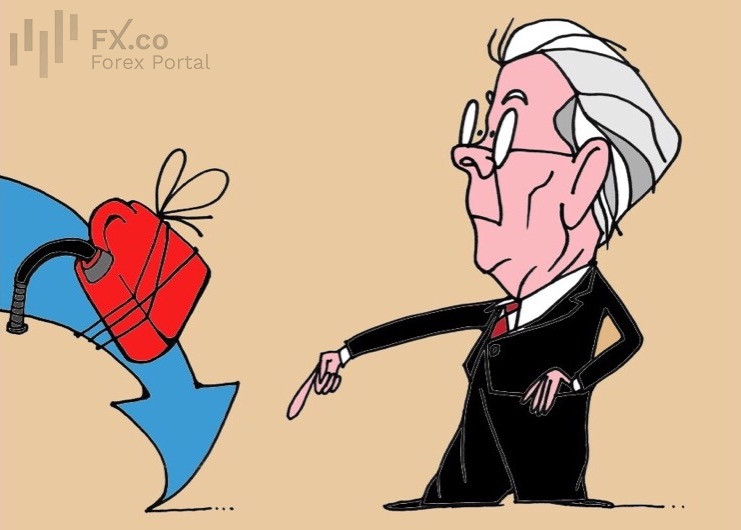
Treasury Secretary Scott Bessent said he expects oil prices to fall materially by the end of 2026, arguing that the current rally reflects a temporary shock driven solely by military escalation in the Middle East.
"Oil prices on the other side of this conflict are going to be much lower," Mr. Bessent said in an interview with Fox Business, describing the recent surge as transitory and tied to the confrontation between the United States, Israel, and Iran.
Market data paints a different near-term picture. The national average retail price of gasoline in the United States reached a four‑year high, the American Automobile Association reported, with the pump price rising to $4.18 a gallon and ticking up a record seven cents in a single day. Since the onset of the active phase of the conflict in late February, gasoline has gained more than 40%, an increase of $1.19 per gallon.
A principal driver of price pressure remains the effective blockade of shipping through the Strait of Hormuz, a route that handles roughly 20% of global oil and liquefied natural gas flows. Disruptions to transit through the waterway have translated rapidly into higher international crude and fuel prices.
The higher price environment has begun to revive US upstream activity. Baker Hughes reported that the count of active rigs in the United States rose for a second consecutive week—the first back-to-back increase since mid-March—signaling that shale producers are seeking to capitalize on tighter global supplies.
Analysts caution that while Treasury expectations are contingent on a swift resolution of geopolitical risks, elevated fuel costs will persist until physical supplies normalize. They say verbal assurances by officials are unlikely to offset the inflationary pressure felt at the pump while logistical bottlenecks remain in place.


