


















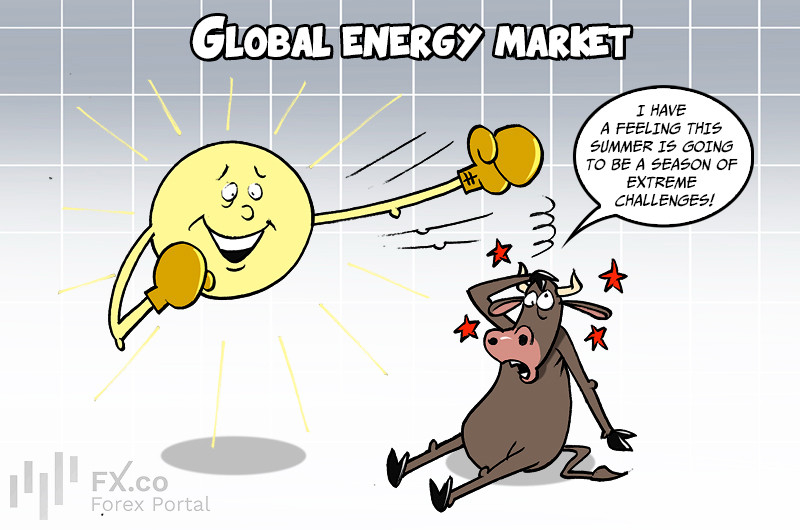
Paul Diggle, chief economist at fund manager Aberdeen, warned that a new phase of the global energy crisis is likely to emerge in the summer of 2026 if the conflict in Iran continues. Seasonal increases in consumer activity in the Northern Hemisphere will place severe strain on hydrocarbon supply chains amid ongoing international instability, he told the Financial Times.
The traditional holiday season typically drives a sharp rise in demand for air conditioning as well as for road and aviation fuels. Diggle said the continued closure of the Strait of Hormuz could create a critical imbalance between supply and demand, pushing Brent crude to as much as $180 a barrel. Before the outbreak of hostilities, the strategic waterway handled a significant share of global hydrocarbon flows, and prices briefly reached about $120 a barrel at the peak of recent tensions.
Brent is currently trading near $110 a barrel, but the risk of renewed price increases remains high. Analysts at Capital Economics project that, should another escalation occur in the Middle East, crude could revisit historical highs before the end of 2026. The probability of that adverse scenario rose after a recent Iranian strike on a nuclear power plant in the United Arab Emirates, the report added.


