FX.co ★ AI at CES 2026: from dancing robots to foldable screens


AI at CES 2026: from dancing robots to foldable screens
Humanoid robots — both for dancing and domestic use
At CES, humanoid robots presented by Unitree and Boston Dynamics moved in sync to music, executing flips and choreographed steps. The models use AI to coordinate their motion, delivering a convincing simulation of human movement. This represents a clear step toward physical AI in factories and homes. Boston Dynamics’ Atlas is reportedly ready for production in partnership with Hyundai. The technology promises to reduce risks in hazardous environments, and the market is forecast to expand to $150 billion in 2026. Robots are also opening niches in education and care.
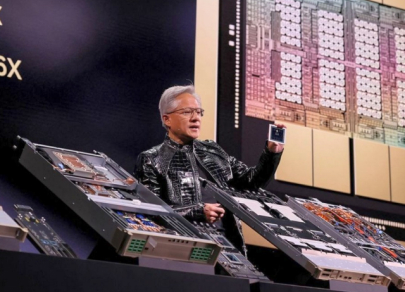
NVIDIA Rubin — platform that accelerates AI
NVIDIA announced Rubin, an AI platform built on a six‑chip architecture that accelerates computation by three to five times. Production started ahead of schedule, helping send shares up about 35%. The move advances what some describe as quasi‑physical AI, where systems learn in the real world. Partnerships with Siemens and Caterpillar aim to integrate Rubin into the industry, unlocking a $500 billion market opportunity. Rubin promises to revolutionize edge computing, bringing AI capabilities to everyday devices.
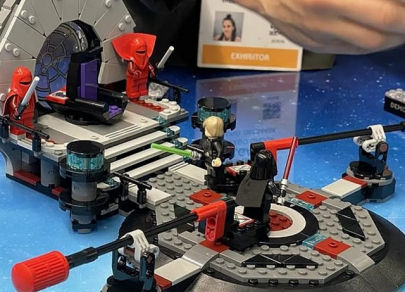
Lego Smart Brick — sensor bricks for interactive play
Lego unveiled Smart Brick, a standard block embedding a 4.1mm chip with motion, orientation, and magnetic‑field sensors. The brick responds to assembly and plays sounds through a built‑in speaker. First sets, framed around Star Wars, will ship in 2026, with prices expected to range from $70 to $160. The technology adds a digital layer without screens, boosting creativity. It is a response to AFOL demand — adult fans of Lego — where kits are becoming smarter. Smart Brick opens a roughly $500 million market for educational applications.
LG OLED evo W6 — ultra‑thin Wallpaper TV
LG unveiled the OLED evo W6, a 9 mm‑thin panel designed to be mounted like wallpaper. The model integrates AI for upscaling, boosting brightness and color reproduction. This is an evolution of the Wallpaper line, where the screen blends into the wall. The announcement won a CES Innovation Award. The W6 is aimed at the premium market, with prices starting at $2,000. The technology promises to cut power consumption by about 20%, opening a niche in smart homes. LG plans IoT integration to personalize content.

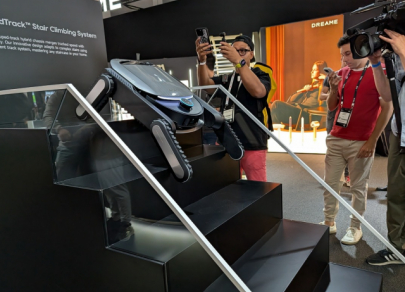
Dreame Cyber X — vacuum that climbs stairs
Dreame announced the Cyber X, a robot vacuum equipped with legs to surmount steps. The model cleans stairways and obstacles using AI for navigation. It addresses multi‑story homes where traditional robots are limited. Cyber X reduces manual labor costs, with a starting price of $800. Tests showed effectiveness on about 90% of surfaces. Dreame plans smart‑home integration for scheduled cleaning. The device is part of a broader trend toward autonomous household appliances.
Autonomous transport — robotaxi and AI in cars
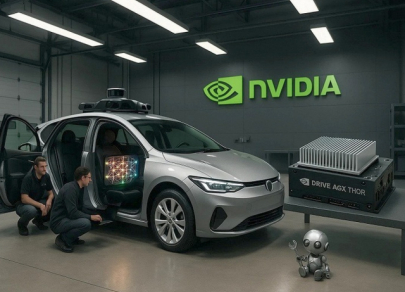
Hyundai, Zoox, and Nvidia pushed advances in robotaxi development and in‑vehicle AI for autonomous driving. Models are being tested in cities with a focus on safety and systems integration. The technology helps autonomous vehicles reason through a wide range of road scenarios, such as handling congested intersections. Nvidia announced a new project to deploy its own robotaxis built on the Drive AGX Thor platform.