FX.co ★ From shells to Bitcoin: great evolution of collective trust


From shells to Bitcoin: great evolution of collective trust
When money had taste and shape
Before minted coinage, people used items with direct practical value as a store of value. Anything was all right: cattle, sacks of salt, and furs. Cowrie shells occupied a special place. Durable, lightweight, and hard to counterfeit, they served for centuries as the main currency across parts of Asia and Africa. The main downside of such a system was inconvenience: you could not split a cow into small pieces to buy bread, and salt spoiled quickly in damp conditions.

Standards from King Croesus
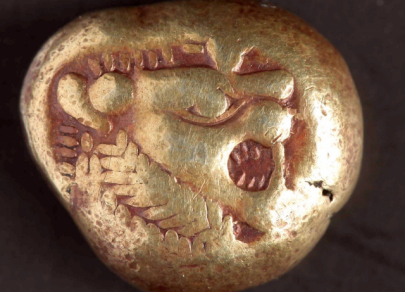
A true financial revolution occurred in the 7th century BCE in the ancient kingdom of Lydia. Local rulers hit upon the idea of minting the first standardized metal discs from electrum, a natural alloy of gold and silver. A state stamp on the coin guaranteed exact weight and metal purity, freeing merchants from the need to weigh metal every time they traded. Money gained durability. King Croesus became legendary for his wealth thanks to this innovation, and the standardized coin quickly conquered the ancient world, launching large‑scale international trade.
How heavy iron turned into light IOUs
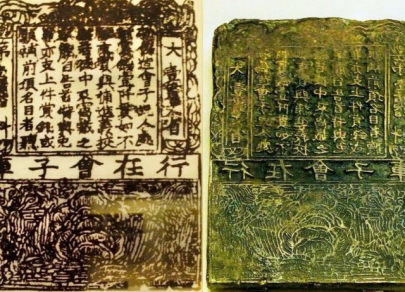
Chinese merchants faced an odd problem in Sichuan province in the 11th century: local iron coins were so heavy that buying a decent bolt of silk required a whole cartload of metal. Therefore, the Song dynasty’s government authorized the issuance of paper certificates called jiaozi. Merchants deposited coins at state warehouses and received lightweight paper receipts sealed by the authorities. This was an epochal shift. For the first time, people accepted a written, weightless equivalent of payment provided its value was guaranteed by state authority.
When paper equaled metal
In the 19th century, the international financial system gained rigid stability under the gold standard. Leading powers legally fixed each paper banknote as a legal claim that a bank was obliged to exchange on demand for a fixed quantity of pure gold. Paper became a convenient duplicate of precious metal. This produced unprecedented trust in national currencies, stabilized global prices and enabled the rise of globalization.

When the dollar was unpegged from gold
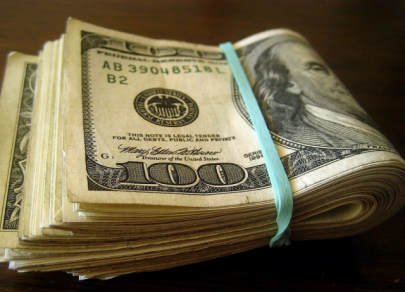
In 1971, US President Richard Nixon carried out an economic coup, unilaterally ending the dollar’s convertibility into gold. That event marked the arrival of fiat money. From that moment, currencies became pure abstractions not backed by physical resources. Their value has since rested solely on government authority, laws, and citizens’ faith that the central bank will not print excessively. Money was finally detached from the planet’s physical resources and became a product of a purely governmental pact.
Dominance of plastic
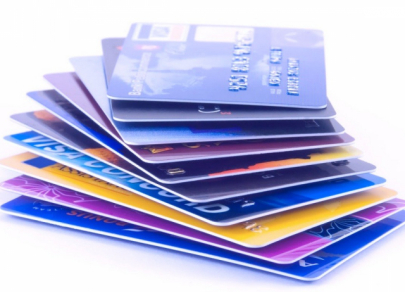
In the mid‑20th century, cash rapidly gave way to cashless payments. It started with a quirk: businessman Frank McNamara forgot his wallet in a restaurant and set out to create a universal card confirming the holder’s creditworthiness. The appearance of magnetic stripes and later secure chips made it possible to turn bank accounts into electronic records on servers. Money physically became a rectangular piece of plastic. People quickly adapted to the idea that they no longer needed to carry stacks of bills to buy things.
Digital evaporation
In the 21st century, money took another step toward dematerialization by moving into smartphones. Thanks to NFC, Apple Pay, and ubiquitous QR codes, even plastic cards are starting to feel archaic. Payments have shrunk to a second-long face scan or a fingerprint tap. Money has become entirely invisible and transformed into streams of instant digital transactions. This stage of evolution has radically changed spending psychology: when a person does not see physical bills and does not hand them over, it becomes much easier to part with money.

Farther from state supervision, closer to the code
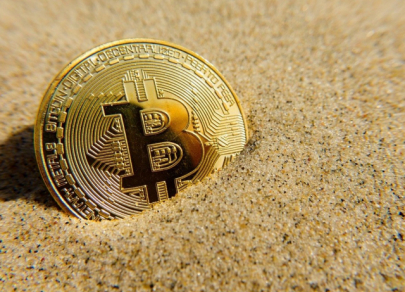
In 2009, the mysterious Satoshi Nakamoto launched Bitcoin, creating the world’s first decentralized cryptocurrency. The blockchain achieved the incredible: it proved that central banks, finance ministries, and armies are not strictly necessary to preserve money’s value. Mathematical algorithms and cryptography can do the work. Bitcoin became “digital gold,” showing the world that value can be generated by a distributed network of computers entirely independent of policymakers or crises.
CBDC: programmable future
The evolution of value is approaching a new finish line with the rollout of central bank digital currencies (CBDCs). These are not just electronic accounts but programmable code. Governments will be able to issue “smart money” with targeted uses or expiry dates: for example, a subsidy could be spendable only on specific social goods and automatically expire if not used within a month. So, the money of the future becomes a flexible instrument of social management, where the value of each digital unit is tightly bound to control algorithms.